
Source and process measurements
Identify monitoring points from existing water analysis and temperature, pressure and flow records.
Review instrumentation, hygienic transfer and operating records from source-water reception to storage and filling.
Review selection pointsDiscuss this applicationReview product locations and fluid paths.
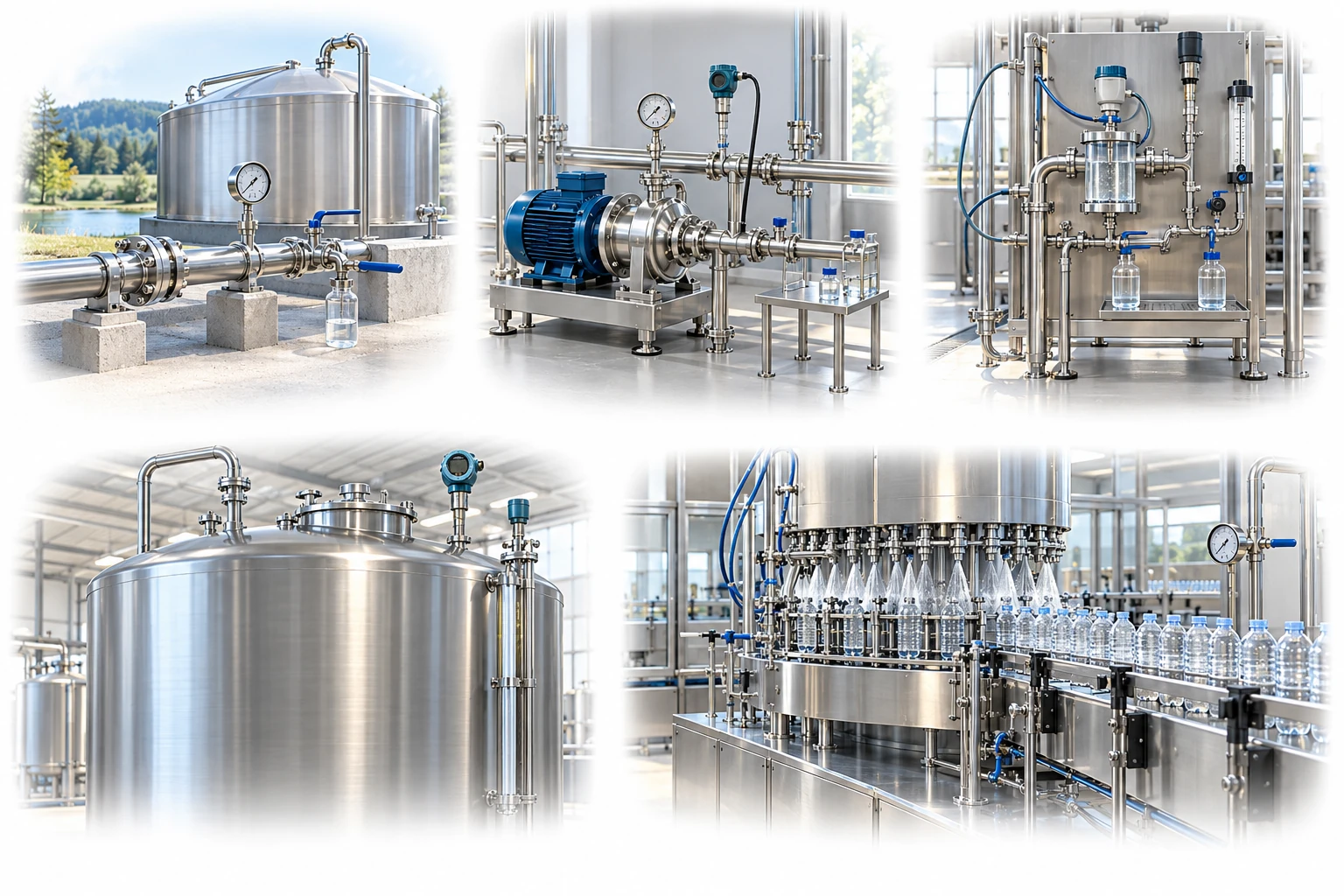
Assess measurement, connections and logging against existing equipment. Confirm wetted materials and cleaning and sanitization conditions with item-specific information and site quality procedures.
A conceptual illustration created to explain equipment and application locations. It is not an actual product photograph, installation photograph or piping/wiring design.
Scroll horizontally to see the complete flow.
Illustrative instrumentation and hygienic-transfer review points. Confirm sensors, communications, wetted materials and site quality procedures for the application.
These conceptual views explain flow direction. Actual piping, wiring and physical flow rates require a separate design.
Define the intended use and conditions to identify the required role of each item.
Identify monitoring points from existing water analysis and temperature, pressure and flow records.
Review wetted materials, connections and sampling locations.
Align storage and filling conditions with cleaning and sanitization records.
Review temperature, pressure, flow and water-quality records at the source, storage tanks and filling line. Assess hygienic tubing, fittings and data collection against the existing equipment and operating conditions.
Scroll horizontally to review all columns.
| Operating objective | Product or connection to review | Selection evidence |
|---|---|---|
| Process conditions | Temperature, pressure and flow measurement | Measuring range, mounting, existing output and calibration needs |
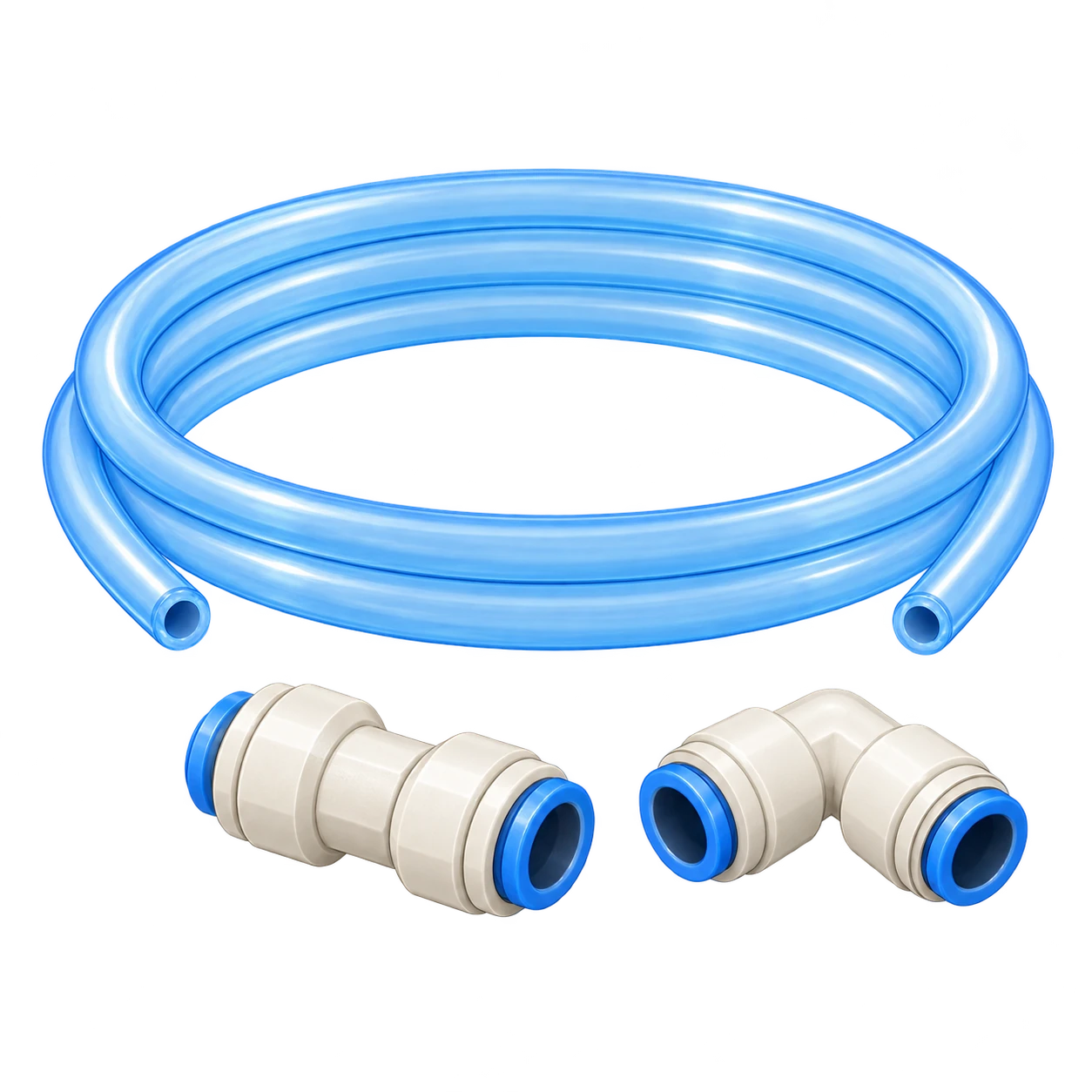
| Hygienic transfer | Tubing, hoses and fittings | Wetted-material suitability, connections, temperature, pressure and cleaning compatibility |
| Quality checks | Sampling and water-quality records | Sampling location and method, analytes and site quality procedures |
| Operating history | Data loggers and monitoring | Existing sensor and communication specifications, logging interval, alarms and retention |
Review measuring ranges, installation locations, wetted materials, cleaning conditions and existing communications. Site quality testing and hygiene procedures remain separate requirements.
Use current operating records and analysis results to identify the measurements needed.
Compare the contact duties and dimensions of tubing, hoses and fittings with manufacturer information for the cleaning and sanitization conditions.
Confirm sensor outputs, logger inputs and communications with the site team before defining data collection and display.
Measurements and records support operating and quality decisions. Use them alongside site quality testing and approved hygiene procedures.
Review the existing sensors and communications first, then assess the required measurement, connection and logging improvements.
These details help narrow the configuration and the evidence to review.
May we use Google Analytics, Google Ads and ChatGPT Ads to measure visits and completed enquiries? Learn more