Review product-contact transfer, small-bore supply and auxiliary utilities by duty.
Transferring product
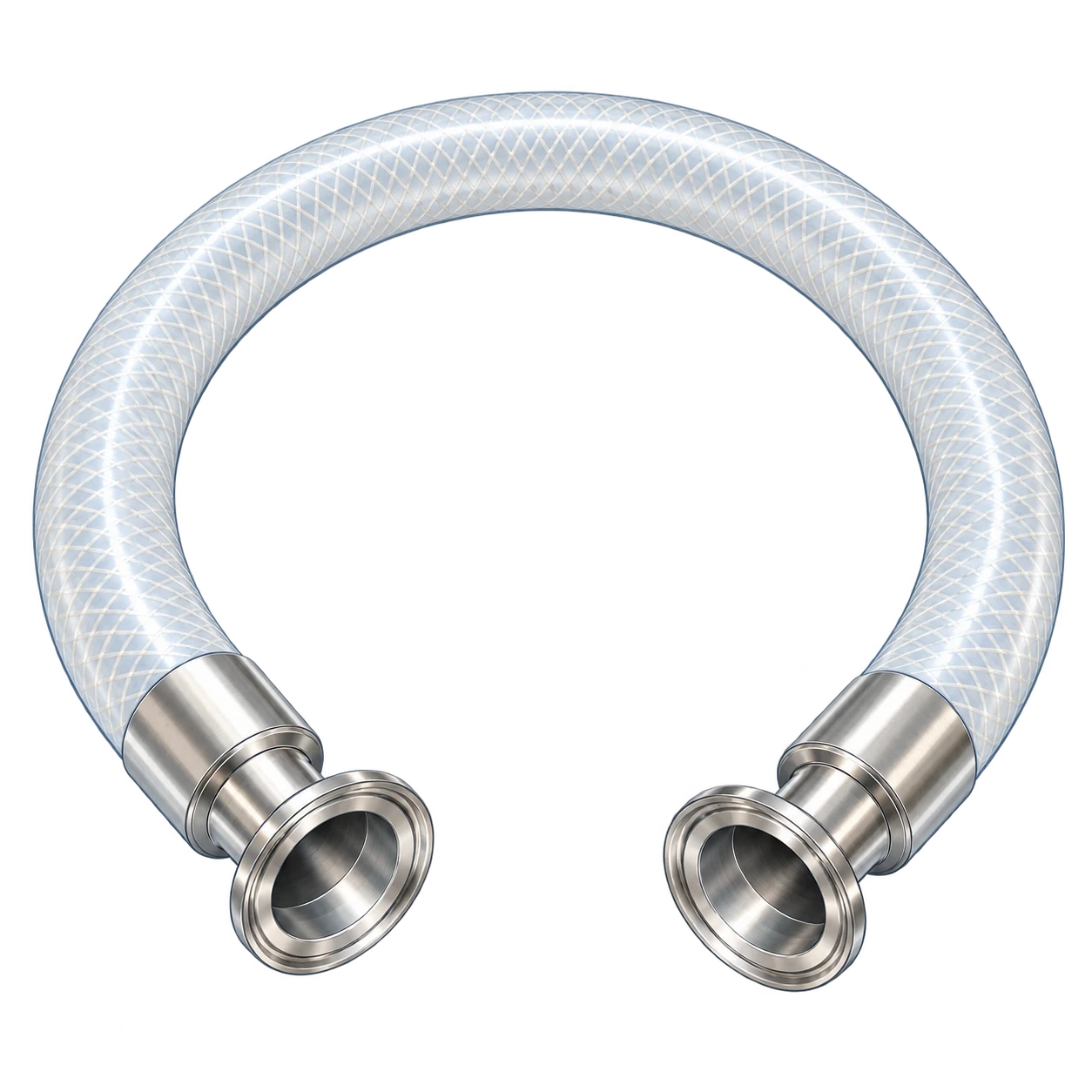
Food-transfer hose
Flexible connections between ingredient or product tanks and equipment. Review wetted layers, reinforcement and end connections for the fluid and cleaning conditions.
Review: Fluid · suction/discharge pressure · temperature/CIP · hose bore and end fittings
Supplying small-bore liquid lines
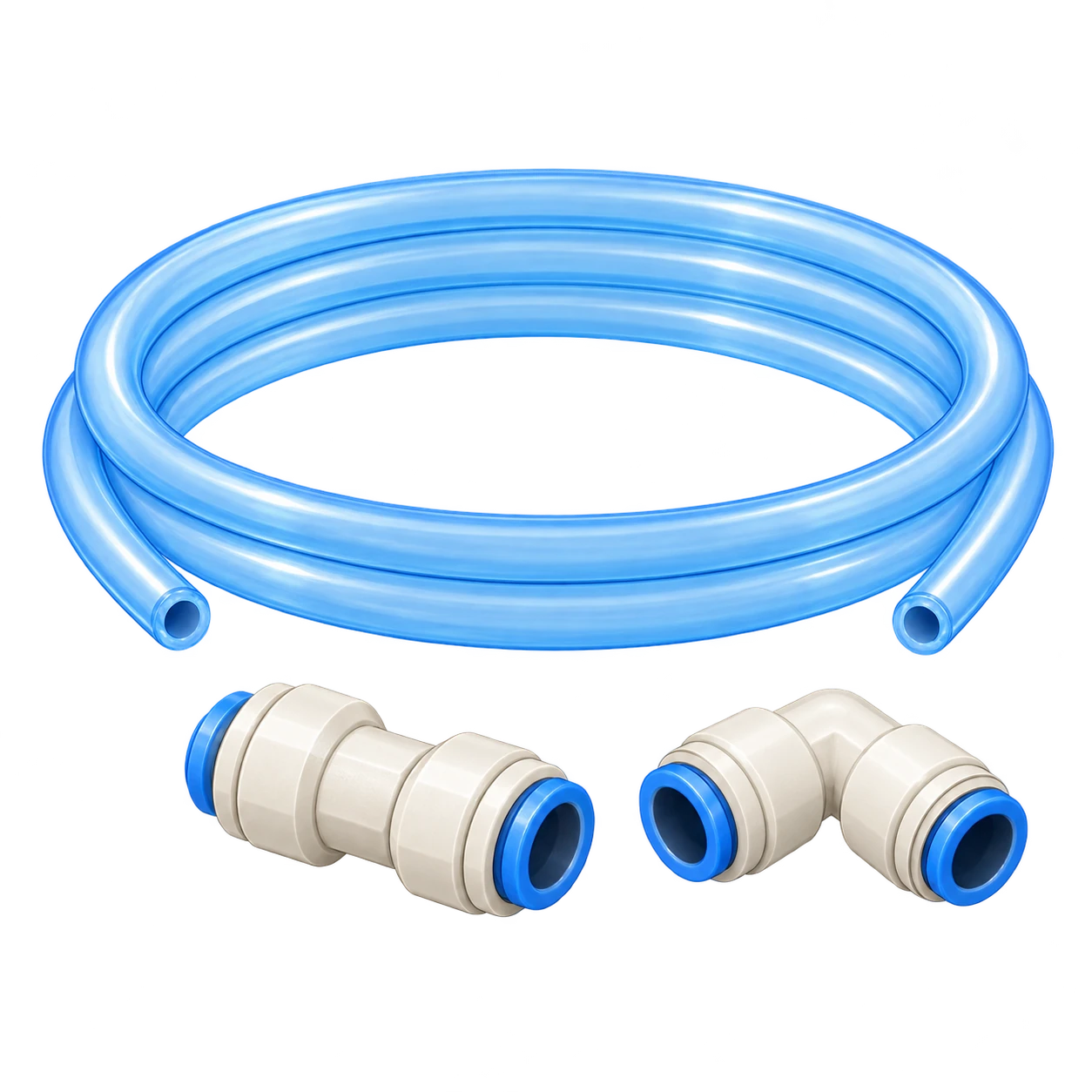
Tubing and push-in fittings
Compare tubing and fittings as a combined set for water treatment, dispensing and similar small-bore liquid lines. Confirm fluid-contact suitability for each item.
Review: Tube OD and tolerance · fluid and temperature · fitting and seal materials
Connecting pneumatic or auxiliary piping
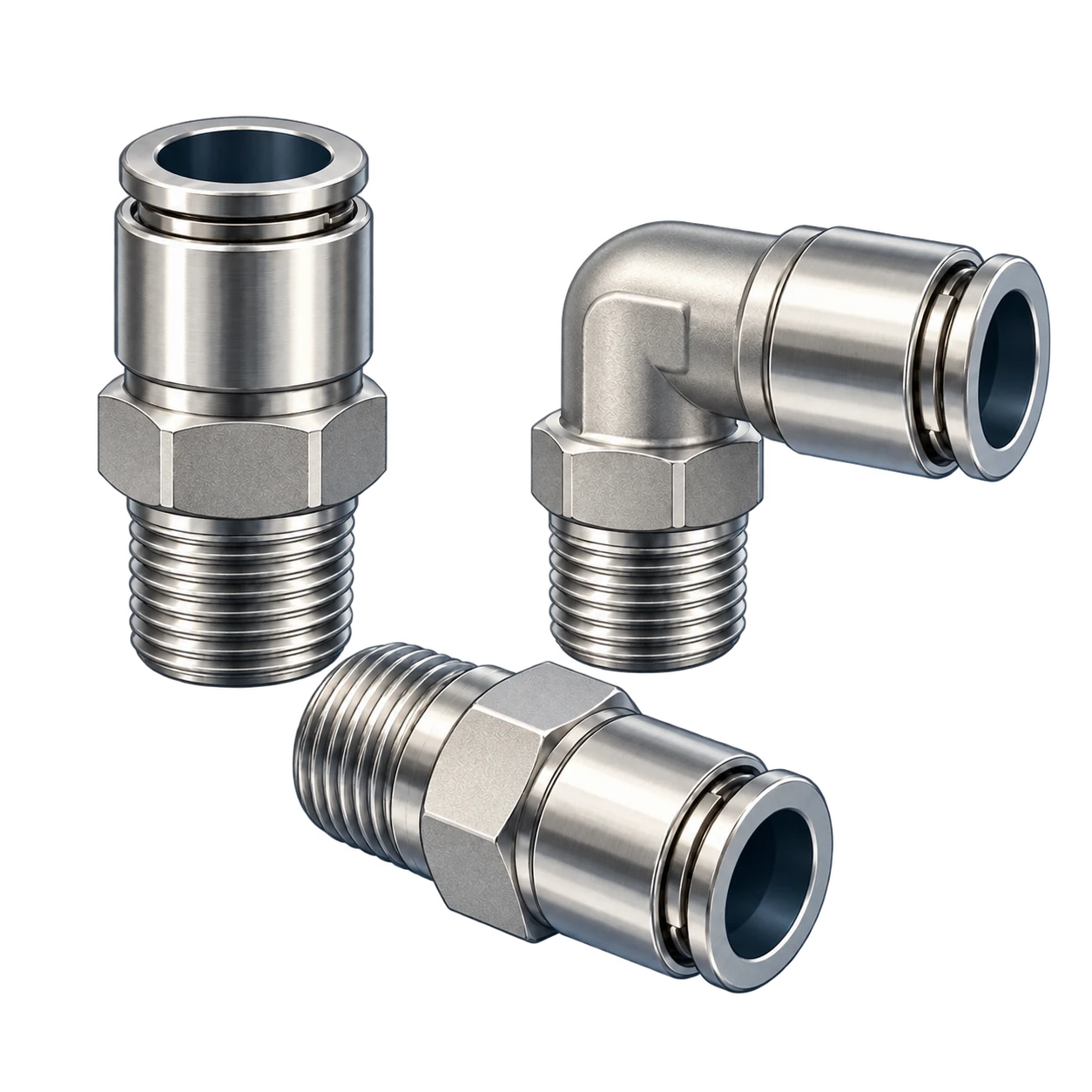
Stainless steel utility fittings
Review pneumatic and auxiliary connections exposed to cleaning environments. Identify requirements for utility duty and hygienic product-contact piping separately.
Review: Thread and tube dimensions · corrosion and cleaning agents · direct food contact
Illustrative product categories based on public product forms. Confirm the actual supply configuration and specifications against the intended conditions.
FIELD APPLICATION & FLOW
See the application in its industrial setting.
Review product locations and fluid paths.
APPLICATION IN CONTEXT
12345
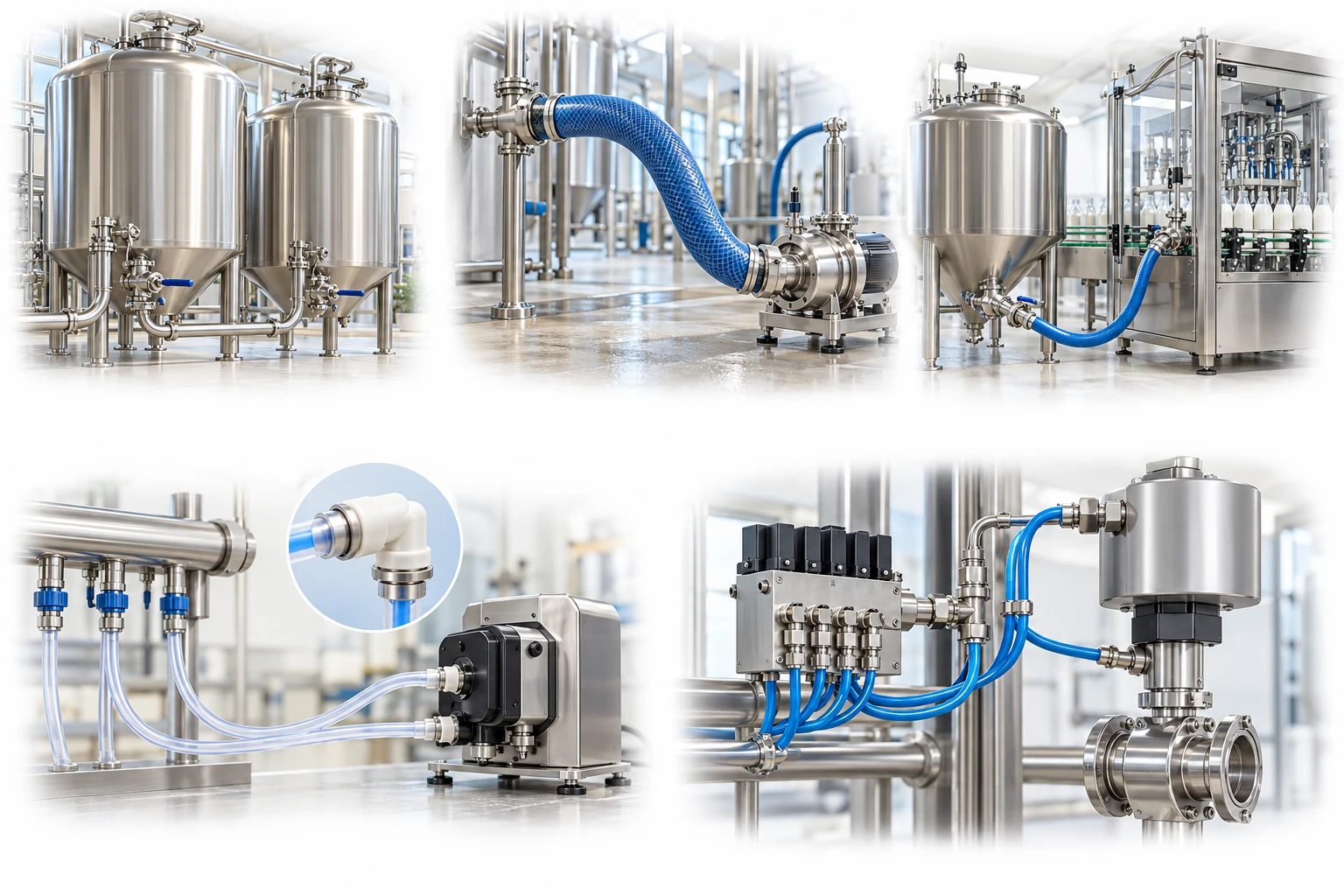
Distinguish sanitary product-transfer hoses, small-bore supply tubing and pneumatic utility fittings at their actual use points.
01Ingredient and product tanks
02Sanitary transfer hose
03Equipment and receiving tank
04Small-bore liquid supply
05Pneumatic and auxiliary utilities
Connections to review
01 → 02 Product transfer
02 → 03 Sanitary transfer path
04 → 03 Small-bore liquid supply
05 → 03 Valve/equipment actuation
Separate the product-contact path from supporting utilities and check the complete connection set for contact suitability, pressure, temperature and cleaning.
A conceptual illustration created to explain equipment and application locations. It is not an actual product photograph, installation photograph or piping/wiring design.
Connection principles and operating/test methods
2D PROCESS GUIDE
Product transfer · Connect tank and next process
Fluid
PRODUCT TYPEFood and beverage transfer hoseIllustrative product form
Scroll horizontally to see the complete flow.
Concept of the product-transfer path. Select the actual hose, end fittings, and seals together for the fluid, pressure, temperature, and cleaning conditions.
Small-bore supply · Select tubing and fittings together
Fluid
PRODUCT TYPESmall-bore tubing and push-in fittingsIllustrative product form
Scroll horizontally to see the complete flow.
An example of small-bore liquid supply. Check contact compatibility for each fluid and the pressure and temperature ranges of every component.
Equipment utility line · Pneumatic connections
Gas
PRODUCT TYPEStainless-steel utility fittingsIllustrative product form
Scroll horizontally to see the complete flow.
An example of an auxiliary pneumatic line. It does not depict sanitary connections for product-contact components or an aseptic fluid path.
These conceptual views explain flow direction. Actual piping, wiring and physical flow rates require a separate design.
01 — PROCESS
Where does each step fit?
Define the intended use and conditions to identify the required role of each item.
01
Application and fluid
Define whether the purpose is product or ingredient transfer, water supply, or equipment pneumatics.
02
Connection selection
Evaluate hoses, tubing, fittings, and seals as an assembly, and check specifications and operating ranges.
03
Installation and verification
Check connection leakage and replacement and inspection procedures under actual cleaning and operating conditions.
02 — SELECTION
What should be selected and verified?
Suitability of the same hose or fitting can vary with the fluid it contacts and the cleaning conditions. Distinguish product-contact components from auxiliary piping using the current specifications and operating environment.
Scroll horizontally to review all columns.
Application duty
Product to review
Selection evidence
Product transfer
Hygienic transfer hose
Fluid-contact layer, reinforcement structure, inside diameter, bending, suction/discharge, and end connections
Small-bore liquid supply
Tubing + push-in fittings
Tube outside diameter and tolerances, pressure and temperature, and compatibility of the fluid and seals
Auxiliary equipment utilities
Threaded and tube connection fittings
Specification system, cleaning agents and external corrosion, gas used, and whether liquid contact occurs
Hygiene and cleaning
Suitability data for the assembly
Food-contact documentation; cleaning agent concentration, temperature, and exposure time; drainage and areas that retain fluid
Check wetted materials, connection combinations, sterilization or cleaning conditions and the actual operating envelope against item-specific evidence.
03 — OPERATING CHECKS
Confirm these points before selection.
01
Start with the current specifications
Distinguish hose inside diameter, tube outside diameter, and thread specifications, and prepare photographs and drawings of the connections.
02
Do not select by material name alone
Check contact suitability documentation and pressure and temperature ranges for each material, item, and set of operating conditions.
03
Evaluate the connections as well
Even when only replacing tubing or combining different fittings, verify the assembly's leakage resistance, pull-out resistance, and suitability for cleaning.
04 — QUESTIONS
Frequently asked questions
Can stainless steel fittings be used in product-contact areas?
Do not decide by material alone. Check whether the internal design, seals, cleanability and drainability, contact suitability, and connection method are appropriate for the application.
Can a hose be replaced with one of the same inside diameter?
Also compare pressure and vacuum, temperature, bending, cleaning, connectors, and product-contact requirements. Replace it after verification under actual conditions.
05 — APPLICATION REVIEW
Prepare the conditions for a technical discussion.
These details help narrow the configuration and the evidence to review.
✓Application and contact fluid / whether product contact occurs
✓Current hose, tubing, and fitting specifications and photographs
✓Flow, suction/discharge pressure, and temperature
✓Cleaning agent, concentration, temperature, and exposure time
✓Required contact suitability documentation / evaluation and supply schedule