
Define air quality requirements
Distinguish the point of use and contact status, and the required criteria for moisture, particles, oil and microbial control.
Methods and checks for applying membrane dryers to compressed-air lines that require moisture control at the point of use.
Review selection pointsDiscuss this applicationReview product locations and fluid paths.
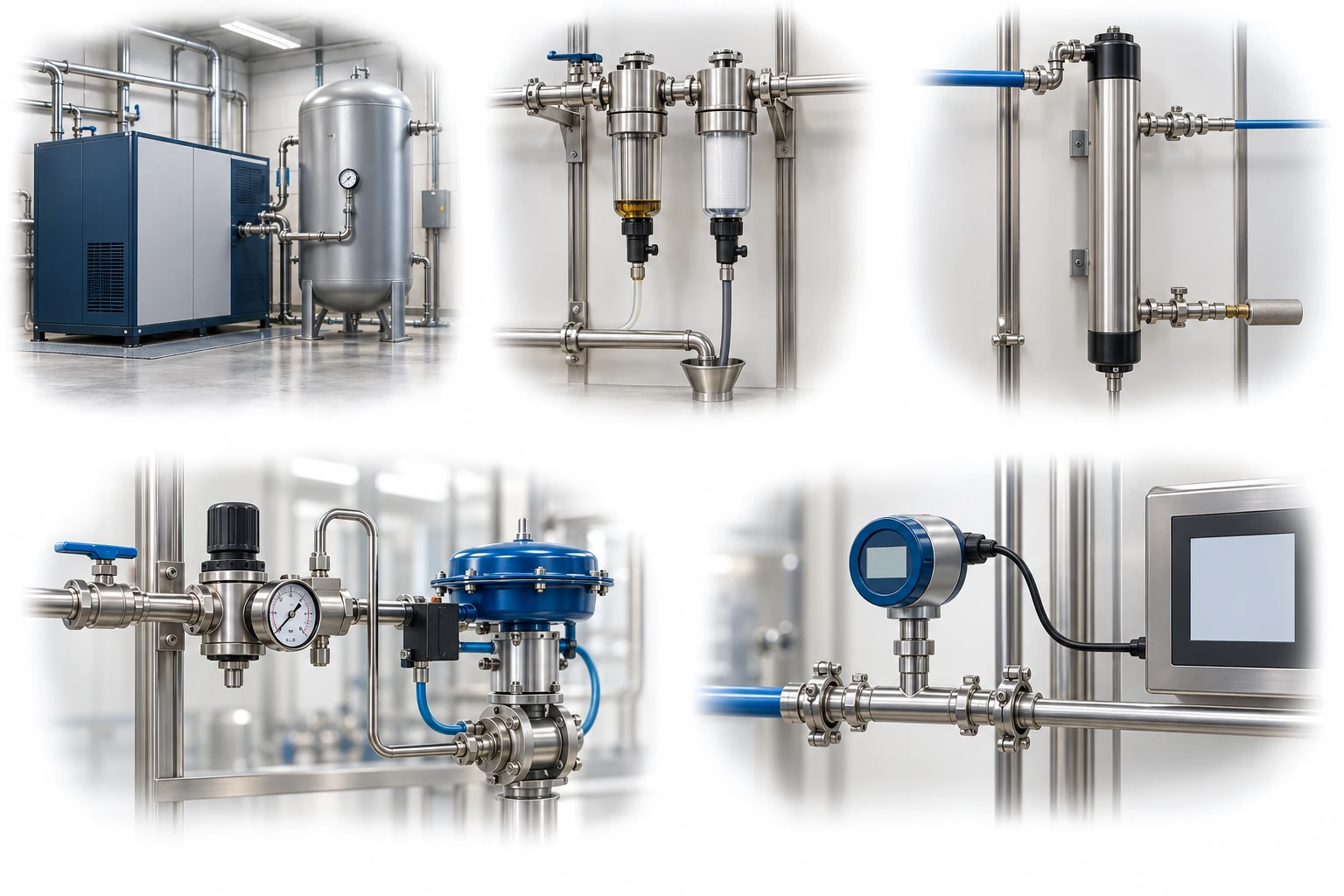
Drying controls moisture. It does not replace particle, oil or microbial controls, and differs from room-humidity control.
A conceptual illustration created to explain equipment and application locations. It is not an actual product photograph, installation photograph or piping/wiring design.
Scroll horizontally to see the complete flow.
This concept diagram shows the moisture-management path. Pretreatment separately removes condensate and particles. A membrane dryer does not replace particle, oil, or microbial removal. Review actual pretreatment, filters, pressure, flow, and target pressure dew point.
These conceptual views explain flow direction. Actual piping, wiring and physical flow rates require a separate design.
Define the intended use and conditions to identify the required role of each item.
Distinguish the point of use and contact status, and the required criteria for moisture, particles, oil and microbial control.
Check inlet pressure, flow and temperature, and existing filters, drains and regulators.
Check pressure dew point, flow, pressure drop and purge loss under actual loads.
A membrane dryer is an equipment utility component that reduces water vapour in compressed air. It does not replace particle, oil or microbial removal, or a sterile-air supply, so the required air quality must be designed together with pretreatment and filtration. Performance and purge-gas consumption vary with pressure, flow, temperature and ambient conditions at the installation location.
Scroll horizontally to review all columns.
| Process objective | Step to review | Selection evidence |
|---|---|---|
| Compressed-air conditions | Point-of-use flow and pressure | Maximum/minimum load, compressor fluctuations, supply temperature and ambient temperature |
| Moisture management | Target pressure dew point | Measurement locations and instruments before and after drying, and operating stabilization time |
| Pretreatment | Particles, oil and condensate | Roles of separators, drains, coalescing filters and final filters |
| Operating losses | Purge and pressure drop | Effects on point-of-use pressure, total energy consumption and supply capacity |
| Process boundary | Intended air use | Product or surface contact, process risk assessment and air quality criteria |
These examples start the application review. Pore size or nominal rating alone does not establish suitability or retention; confirm with the actual process fluid and supplier evidence.
This device is intended to reduce water vapour. Separately confirm the separation and filtration stages needed for particles, oil and microbial control.
Do not judge condensation risk at the end of the piping from dryer outlet conditions alone. Record pressure, temperature and load fluctuations together with measurement locations.
Purge volume and performance can vary with the required dew point, supply pressure and flow, so compare under site conditions.
No. Moisture management and control of particles, oil and microorganisms are separate requirements. Confirm a point-of-use air risk assessment and an appropriate treatment and validation configuration.
Flow, pressure and temperature ranges, required pressure dew point, existing pretreatment and filters, point of use and air quality criteria are needed.
These details help narrow the configuration and the evidence to review.
Confirm model suitability and supply scope through a technical review. Use each card to make an enquiry or review official manufacturer information.
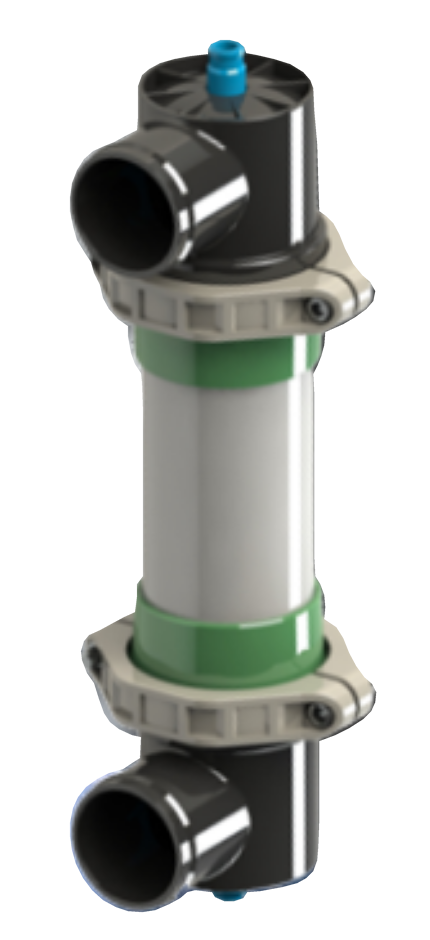
Manufacturer-supplied product image (3D). Confirm the supplied model’s form, connections and operating range in manufacturer documentation.
A membrane dryer presented by PHILOS for compressed-air drying. Confirm flow, inlet conditions, target pressure dew point and pretreatment for the selected model.
Enquire about this productManufacturer product explanation ↗Product photographs and manufacturer images use permitted official materials and source links. Original explanatory schematics are identified separately from actual product photographs.
May we use Google Analytics, Google Ads and ChatGPT Ads to measure visits and completed enquiries? Learn more