
Preparation
Review the order of raw material addition, solubility, and mixing and storage times.
Design filtration stages around composition, dissolution state, and contamination control objectives.
Review selection pointsDiscuss this applicationReview product locations and fluid paths.
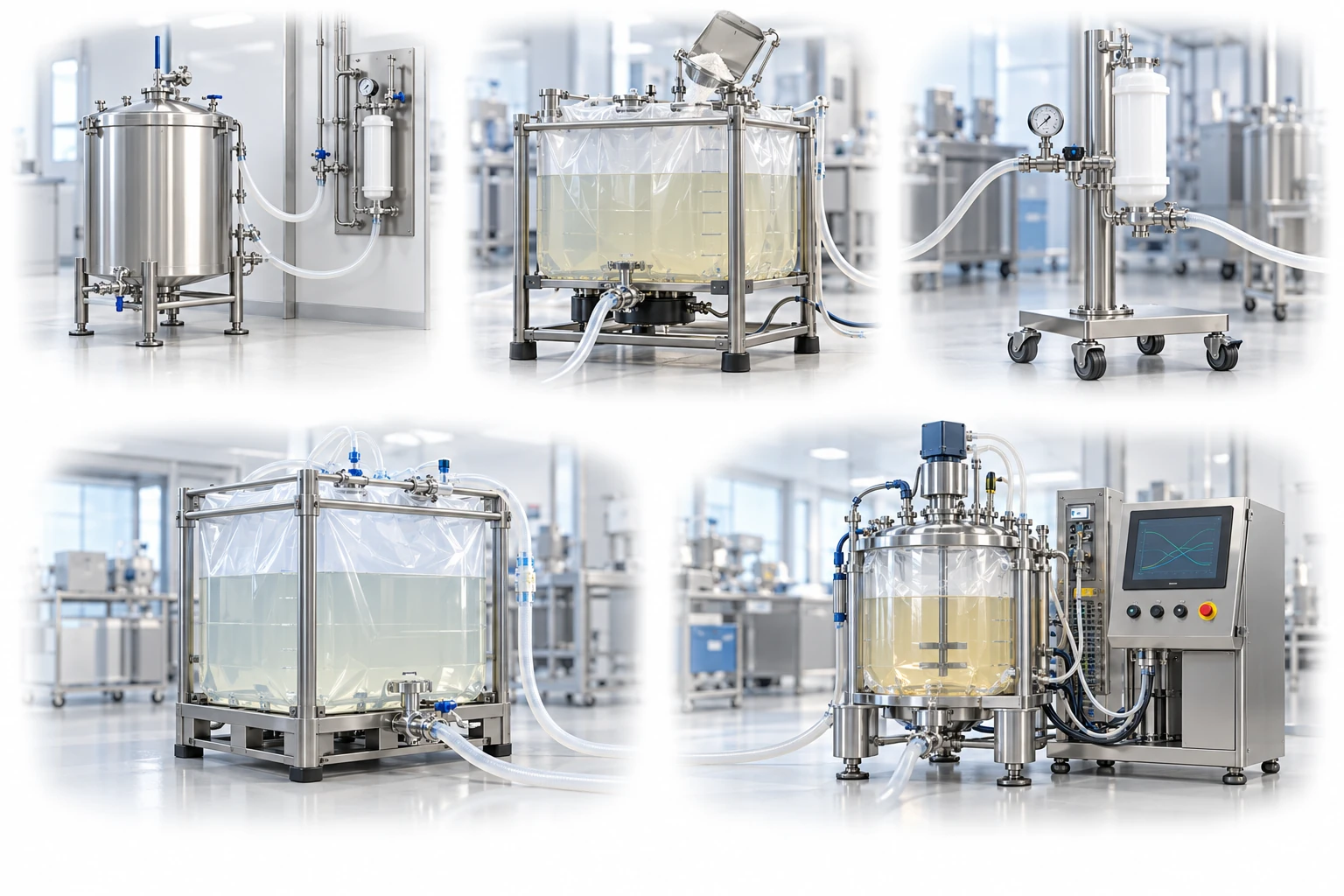
Filter selection and validation differ for particle, bacterial, mycoplasma and virus-control objectives.
A conceptual illustration created to explain equipment and application locations. It is not an actual product photograph, installation photograph or piping/wiring design.
Scroll horizontally to see the complete flow.
Check filter compatibility and capacity with the actual media or buffer composition. The final microbial-control membrane shown requires product-specific validation.
These conceptual views explain flow direction. Actual piping, wiring and physical flow rates require a separate design.
Define the intended use and conditions to identify the required role of each item.
Review the order of raw material addition, solubility, and mixing and storage times.
Review the stages needed for the particle load and target microbial level.
Check the integrity of containers, vents, and piping, and the storage conditions before use.
Even for the same medium or buffer, proteins, surfactants, salts, and additives can change fouling and adsorption. First define whether the objective is particle removal, microbial control, or an additional barrier against a specific contaminant.
Scroll horizontally to review all columns.
| Process objective | Step to review | Selection evidence |
|---|---|---|
| Incomplete dissolution and precipitation | Preparation and pretreatment | pH, conductivity, temperature, and mixing sequence |
| Microbial control | Validated liquid filters | Retention performance and processing time with the actual formulation |
| Additive losses | Material compatibility | Protein and surfactant adsorption and recovery |
| Additional contamination barriers | Technologies dedicated to each target | Performance data specific to mycoplasma or viruses |
These examples start the application review. Pore size or nominal rating alone does not establish suitability or retention; confirm with the actual process fluid and supplier evidence.
Perform filterability tests that reflect the actual viscosity of the medium and its interactions with the membrane.
Compare microbial conditions and precipitation immediately after preparation and just before use.
Review whether components susceptible to adsorption, and raw materials important to pH, conductivity, and performance, are retained.
A typical bacteria-retentive filter cannot guarantee virus removal. A dedicated technology suited to the target and appropriate validation are required.
Precipitation may result from downstream temperature changes or formulation and mixing conditions. First distinguish the underlying causes.
These details help narrow the configuration and the evidence to review.
Confirm model suitability and supply scope through a technical review. Use each card to make an enquiry or review official manufacturer information.
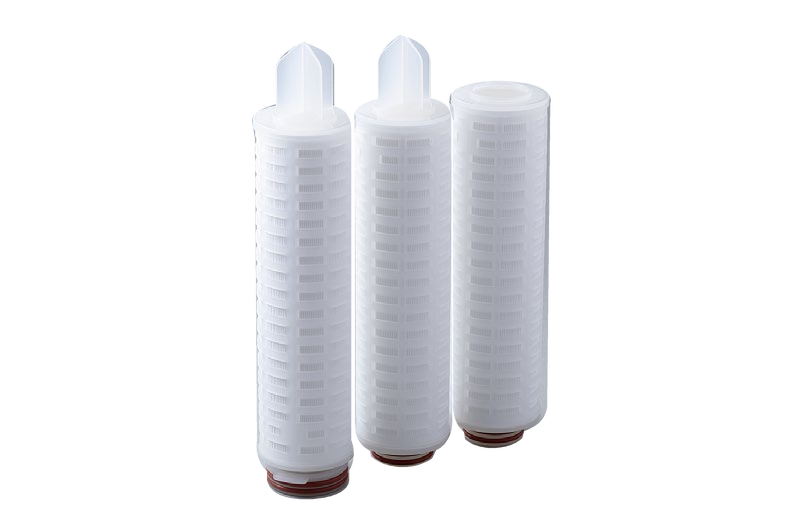
A hydrophilic PES 0.2 μm membrane cartridge described for sterilizing filtration of pharmaceutical liquids. Verify compatibility, microbial retention and integrity-test conditions for the actual process.
Enquire about this productManufacturer company information ↗Product photographs and manufacturer images use permitted official materials and source links. Original explanatory schematics are identified separately from actual product photographs.
May we use Google Analytics, Google Ads and ChatGPT Ads to measure visits and completed enquiries? Learn more