
Define the product and operating range
Define maximum time, pressure, and temperature, as well as concentration, viscosity, and bioburden.
Go beyond the stated pore size and verify performance with the actual product and process conditions.
Review selection pointsDiscuss this applicationReview product locations and fluid paths.
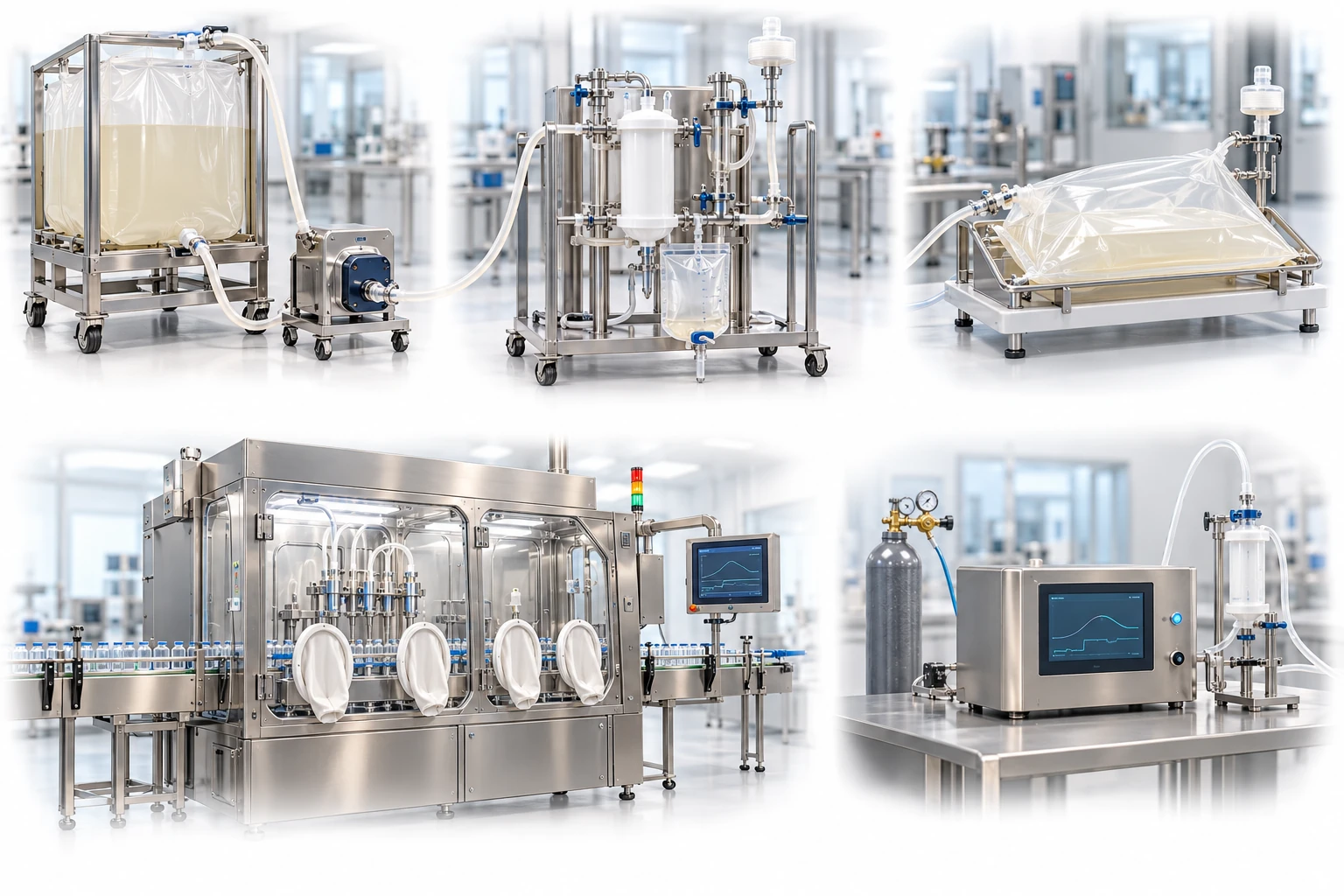
An integrity-test pass alone does not guarantee finished-product sterility. Review the downstream boundary and process validation.
A conceptual illustration created to explain equipment and application locations. It is not an actual product photograph, installation photograph or piping/wiring design.
Scroll horizontally to see the complete flow.
Product- and process-specific validation and integrity control before and after use are required. Validate retention and integrity of the sterilizing-grade membrane and control downstream contamination. Nominal pore size alone does not establish suitability for sterilizing filtration.
These conceptual views explain flow direction. Actual piping, wiring and physical flow rates require a separate design.
Define the intended use and conditions to identify the required role of each item.
Define maximum time, pressure, and temperature, as well as concentration, viscosity, and bioburden.
Verify retention performance, compatibility, recovery, and integrity acceptance criteria.
Control the process through established filtration and test procedures and batch records.
For sterilizing-grade filters, microbial retention validation must be linked to integrity acceptance criteria. Review chemical compatibility with the product, extractables and leachables, adsorption, capacity, and sterilization conditions together.
Scroll horizontally to review all columns.
| Process objective | Step to review | Selection evidence |
|---|---|---|
| Microbial retention | Product- and process-specific validation | Challenge organism, actual product or a justified surrogate fluid, and worst-case conditions |
| Product quality | Adsorption, aggregation, and E&L | Protein and surfactant recovery and quality attributes |
| Processing capacity | Filtration tests with representative feed | Concentration, viscosity, flux, maximum differential pressure, and batch processing time |
| Integrity management | Validated test methods | Plans for post-sterilization pre-use testing, post-use testing, and failure investigations |
These examples start the application review. Pore size or nominal rating alone does not establish suitability or retention; confirm with the actual process fluid and supplier evidence.
Verify that integrity test limits correlate with the microbial retention performance of the filter concerned.
Do not size filter area for a highly concentrated product using only the high flow rates achieved with water or diluted solutions.
Address maintenance of sterility in downstream piping, connections, and filling operations together with the contamination control strategy.
Do not judge by the pore size label alone. Review the manufacturer’s retention validation, integrity correlation data, and process-specific validation.
Plan post-sterilization pre-use testing in line with the applicable regulations and contamination control strategy. Where performing the test is difficult, the quality department must assess the justification against the relevant requirements.
These details help narrow the configuration and the evidence to review.
Confirm model suitability and supply scope through a technical review. Use each card to make an enquiry or review official manufacturer information.
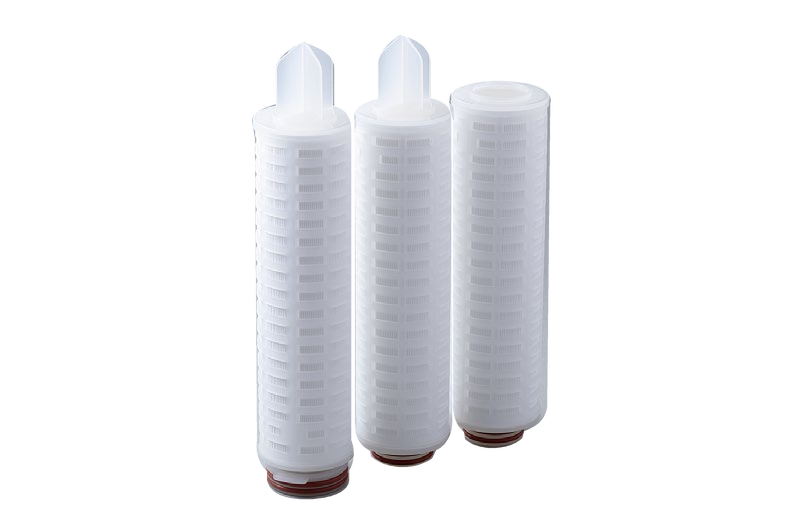
A hydrophilic PES 0.2 μm membrane cartridge described for sterilizing filtration of pharmaceutical liquids. Verify compatibility, microbial retention and integrity-test conditions for the actual process.
Enquire about this productManufacturer company information ↗Product photographs and manufacturer images use permitted official materials and source links. Original explanatory schematics are identified separately from actual product photographs.
Document availability and scope depend on the manufacturer, product code and configuration. Tell us which documents you need and the purpose of your review.
Availability and disclosure scope: confirm individually
This list does not guarantee that documents are held or available. Evaluation and approval for the actual process remain subject to the customer’s quality procedures.
Ask about required documentsSelection, replacement or quantity and lead-time review. Start with the information you have.
May we use Google Analytics, Google Ads and ChatGPT Ads to measure visits and completed enquiries? Learn more