
Define the resource assessment scope
Set the technology, location, period, and required uncertainty.
Interpret resource data by distinguishing direct and diffuse components and long-term variability.
Review selection pointsDiscuss this applicationFollow light, sensor measurements and data connections.
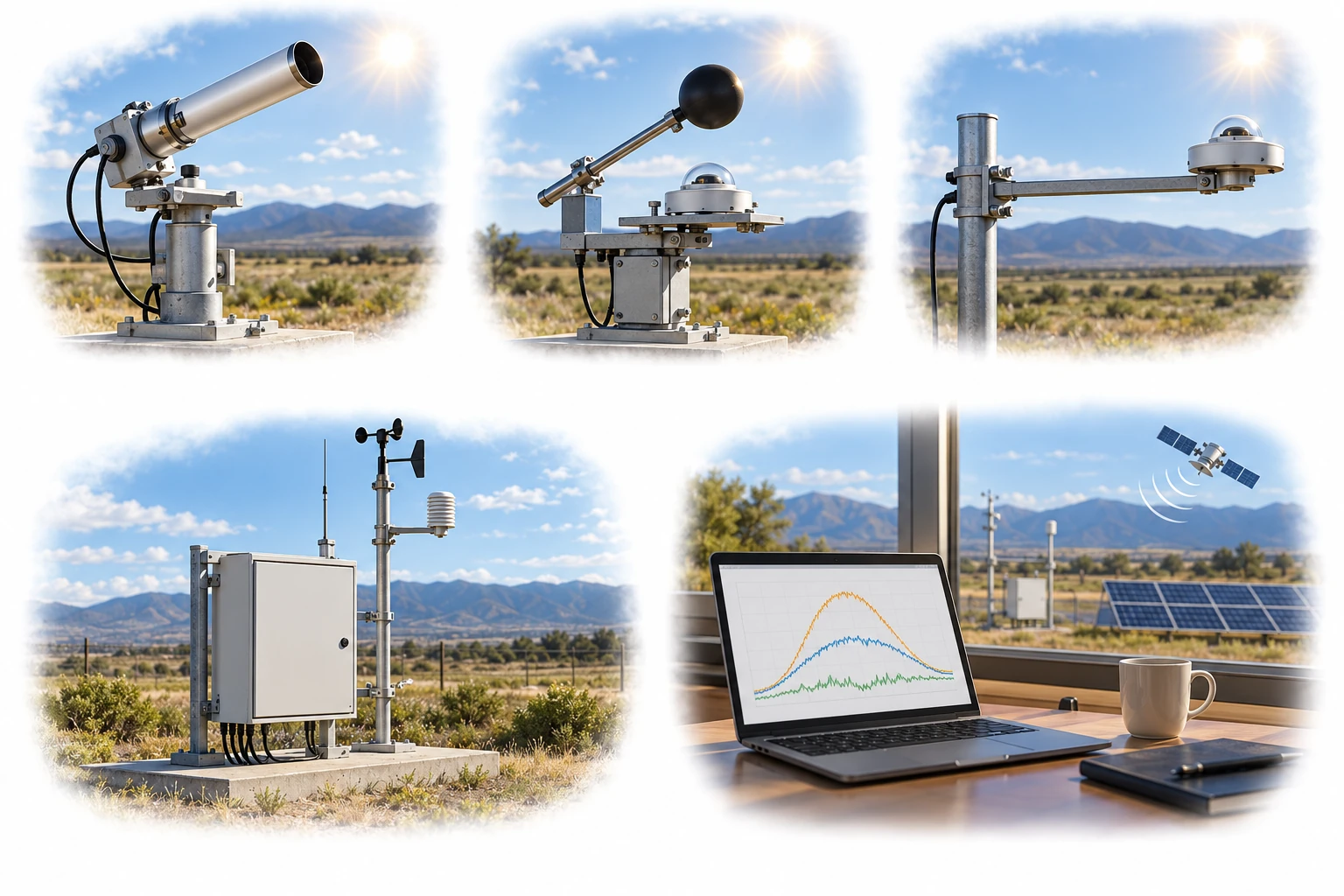
DNI is sun-pointing, DHI is shaded horizontal and GHI is unshaded horizontal. A short campaign does not guarantee long-term generation.
A conceptual illustration created to explain equipment and application locations. It is not an actual product photograph, installation photograph or piping/wiring design.
Scroll horizontally to see the complete flow.
The configuration measures DNI as direct sunlight from the sun direction, DHI as diffuse irradiance on a horizontal plane with direct sunlight shaded, and GHI as global horizontal irradiance.
These conceptual views explain flow direction. Actual piping, wiring and physical flow rates require a separate design.
Define the intended use and conditions to identify the required role of each item.
Set the technology, location, period, and required uncertainty.
Review measurement methods for direct, diffuse, and global irradiance, together with tracking and shading configurations.
Analyze observation quality, long-term representativeness, and differences from satellite and model data.
DNI is direct irradiance on a plane perpendicular to the direction of the sun; DHI is diffuse irradiance on a horizontal plane with the direct component blocked. Site observations and satellite or model data differ in coverage and error structure, so combine them according to the purpose.
Scroll horizontally to review all columns.
| Measurement objective | Item to review | Selection evidence |
|---|---|---|
| Direct irradiance | DNI measurement | Solar tracking, collimation, field of view, and calibration |
| Diffuse irradiance | DHI measurement | Shading device, alignment, and review of shading corrections |
| Component consistency | Compare GHI, DNI, and DHI | Time alignment, solar zenith angle, and quality conditions |
| Long-term resource | Observations + long-term records | Year-to-year variability, spatial representativeness, missing data, and uncertainty |
Review sensor suitability against the objective, installation environment, calibration evidence, system configuration and supplier specifications.
Observations over a short period alone cannot guarantee a long-term average or future energy generation.
Direct and diffuse measurements are affected by device alignment and maintenance condition.
Record differences among satellite grids, site sensors, and model corrections together.
Use the relationship GHI = DNI × cos(solar zenith angle) + DHI. Check that the values were measured at the same time and under the same conditions.
Decide based on the project purpose and uncertainty requirements. Site observations play a distinct role in checking site conditions and operating performance.
These details help narrow the configuration and the evidence to review.
Confirm model suitability and supply scope through a technical review. Use each card to make an enquiry or review official manufacturer information.
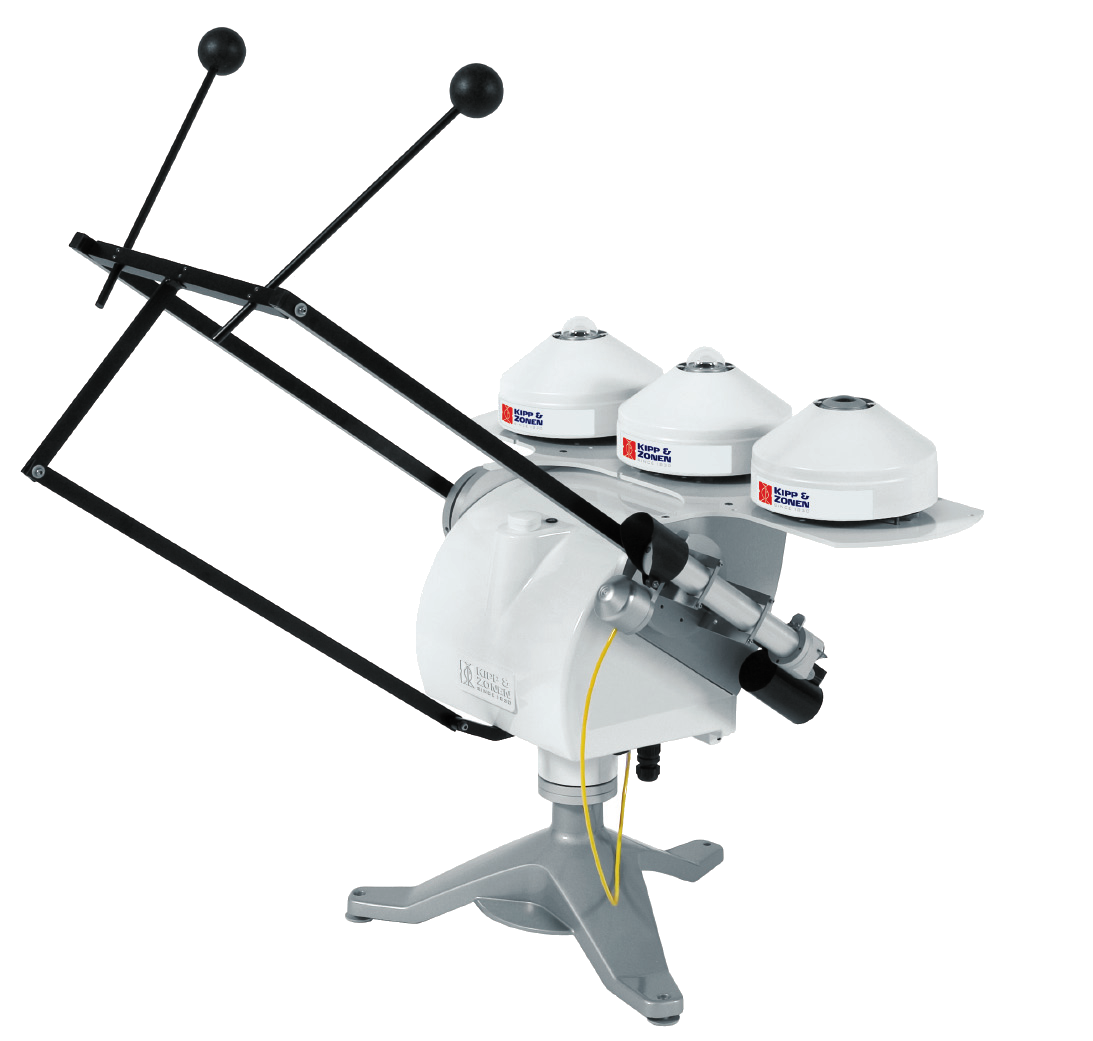
A sun-tracking platform for mounted solar-radiation instruments. The photograph shows an instrumented example; confirm radiometers, shading accessories and supply scope separately.
Enquire about this productOfficial manufacturer product information ↗Product photographs and manufacturer images use permitted official materials and source links. Original explanatory schematics are identified separately from actual product photographs.
May we use Google Analytics, Google Ads and ChatGPT Ads to measure visits and completed enquiries? Learn more