
Select the required measurements
Choose the measurements to be used for generation analysis, soiling assessment, and site operations.
Choose the measurements needed to distinguish weather-related changes in energy generation from equipment-related changes.
Review selection pointsDiscuss this applicationFollow light, sensor measurements and data connections.
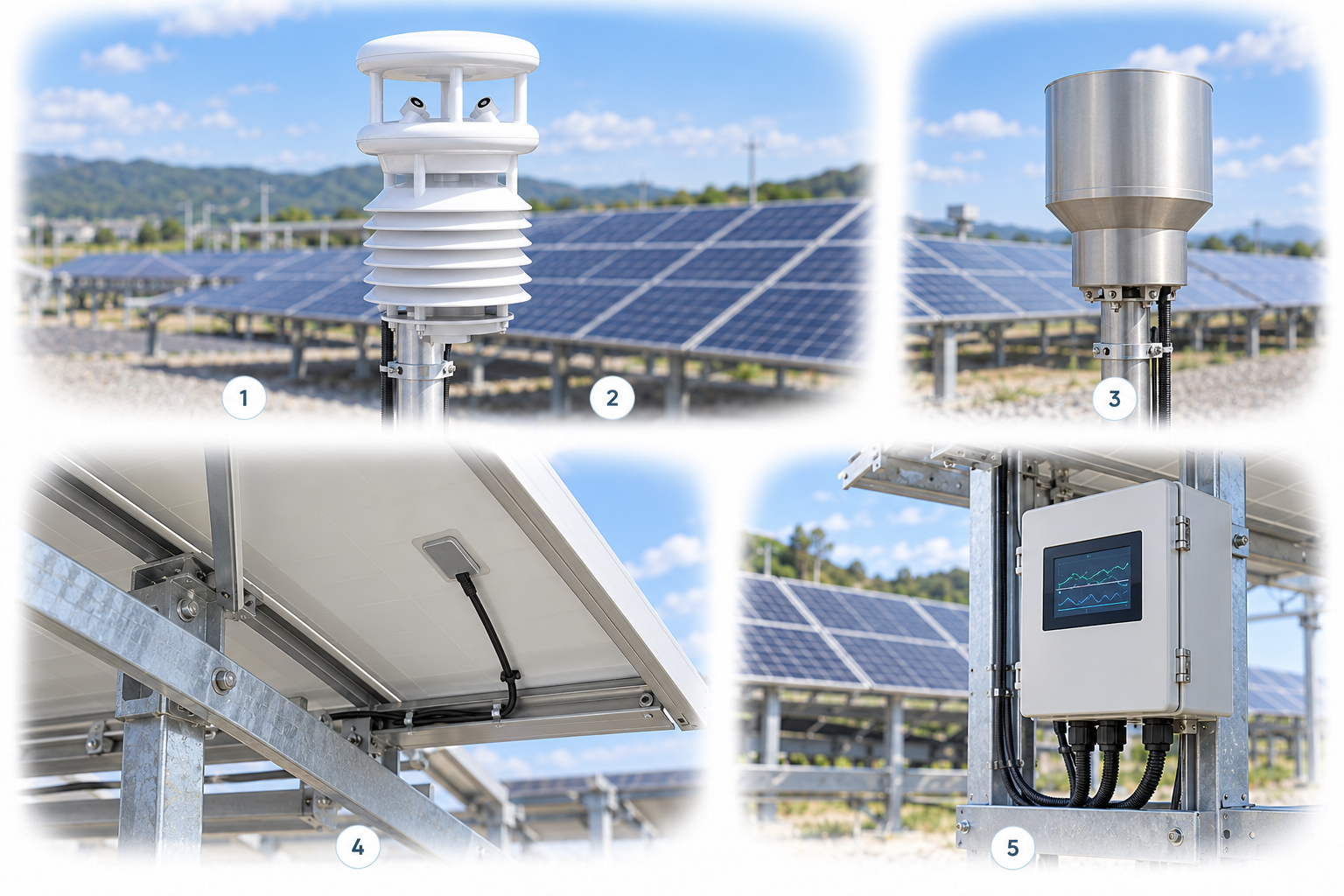
1 and 2 are functional regions of the same WS500-J. A rain sensor or module-temperature probe is not implied to be included in its body. Verify supply scope, installation locations and logging connections for each configuration. Dashboard traces are illustrative, not actual measurement data.
A conceptual illustration created to explain equipment and application locations. It is not an actual product photograph, installation photograph or piping/wiring design.
Scroll horizontally to see the complete flow.
Blue dashed lines show sensor measurement signals. Check radiation shielding for air temperature and humidity, attachment for module temperature, and structural interference for wind measurements.
These conceptual views explain flow direction. Actual piping, wiring and physical flow rates require a separate design.
Define the intended use and conditions to identify the required role of each item.
Choose the measurements to be used for generation analysis, soiling assessment, and site operations.
Review the effects of radiation, attachment to the module, and interference with the wind field from structures.
Check soiling, condensation, attachment condition, calibration, and communication quality.
Ambient temperature, module temperature, wind speed and direction, and rainfall require different installation locations and maintenance. Compare the installation convenience, calibration, and fault response of integrated and separate sensor configurations.
Scroll horizontally to review all columns.
| Measurement objective | Item to review | Selection evidence |
|---|---|---|
| Ambient temperature and humidity | Radiation shielding and ventilation | Direct sunlight, radiant heat, nearby heat sources, and installation location |
| Module temperature | Rear contact sensor | Attachment method, location, thermal insulation, and cable securing |
| Wind speed and direction | Representative wind field | Installation height, interference from structures, and reference azimuth |
| Rainfall and environmental conditions | Sensors suited to the purpose | Rainfall occurrence or amount, soiling, icing, and maintenance |
Review sensor suitability against the objective, installation environment, calibration evidence, system configuration and supplier specifications.
The temperature difference is an important factor in interpreting power output. Name the data channels clearly.
Determine whether calibrating or repairing one sensor requires removal of the entire device, and assess the resulting data gaps.
Check power supply, communications, grounding, surge protection, cable entry, and the environmental rating required at the site.
It simplifies wiring and installation, but may limit the optimal location for each measurement and the methods of calibration and replacement. Compare options against operating conditions.
Review representativeness and sensor quantity based on the array configuration, temperature variation, and assessment purpose.
These details help narrow the configuration and the evidence to review.
Confirm model suitability and supply scope through a technical review. Use each card to make an enquiry or review official manufacturer information.
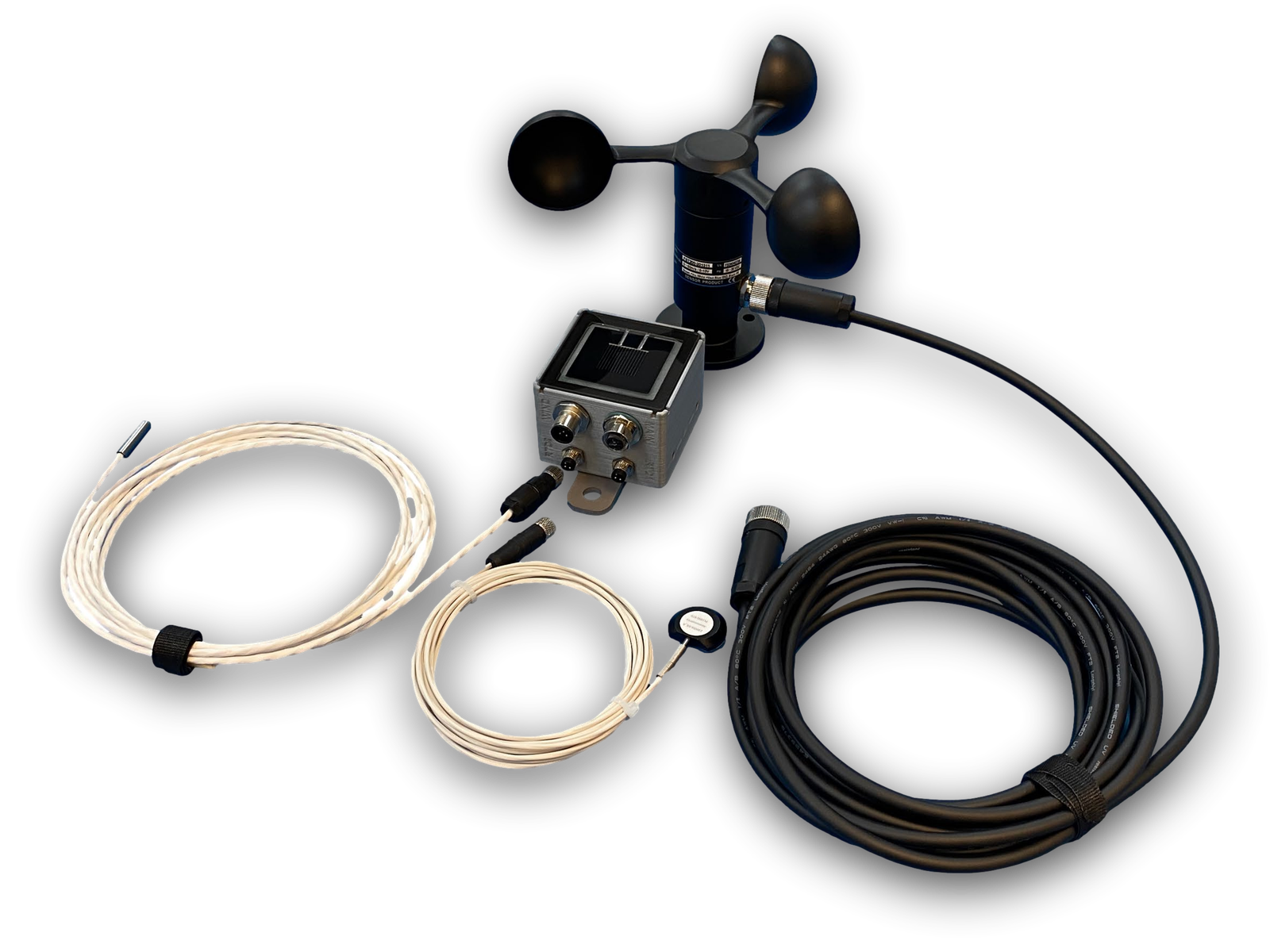
Example configuration connecting an RC22M reference cell with wind-speed, ambient-temperature RTD and module-temperature RTD sensors. Peripheral sensors and cables are optional; confirm the supplied configuration.
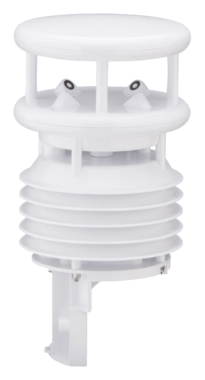
Enquire about this productOfficial manufacturer product information ↗The WS J-Series family of integrated weather sensors covers wind, ambient temperature, relative humidity, pressure and other measurements. Confirm measurement capabilities, external temperature input and module-temperature probe supply and installation for the selected model.
Enquire about this productKIPP & ZONEN product information ↗Product photographs and manufacturer images use permitted official materials and source links. Original explanatory schematics are identified separately from actual product photographs.
May we use Google Analytics, Google Ads and ChatGPT Ads to measure visits and completed enquiries? Learn more