
Filling and aseptic connection
Define a filling path and connection method suited to the process, and apply the verification procedures for the bag and its connections.
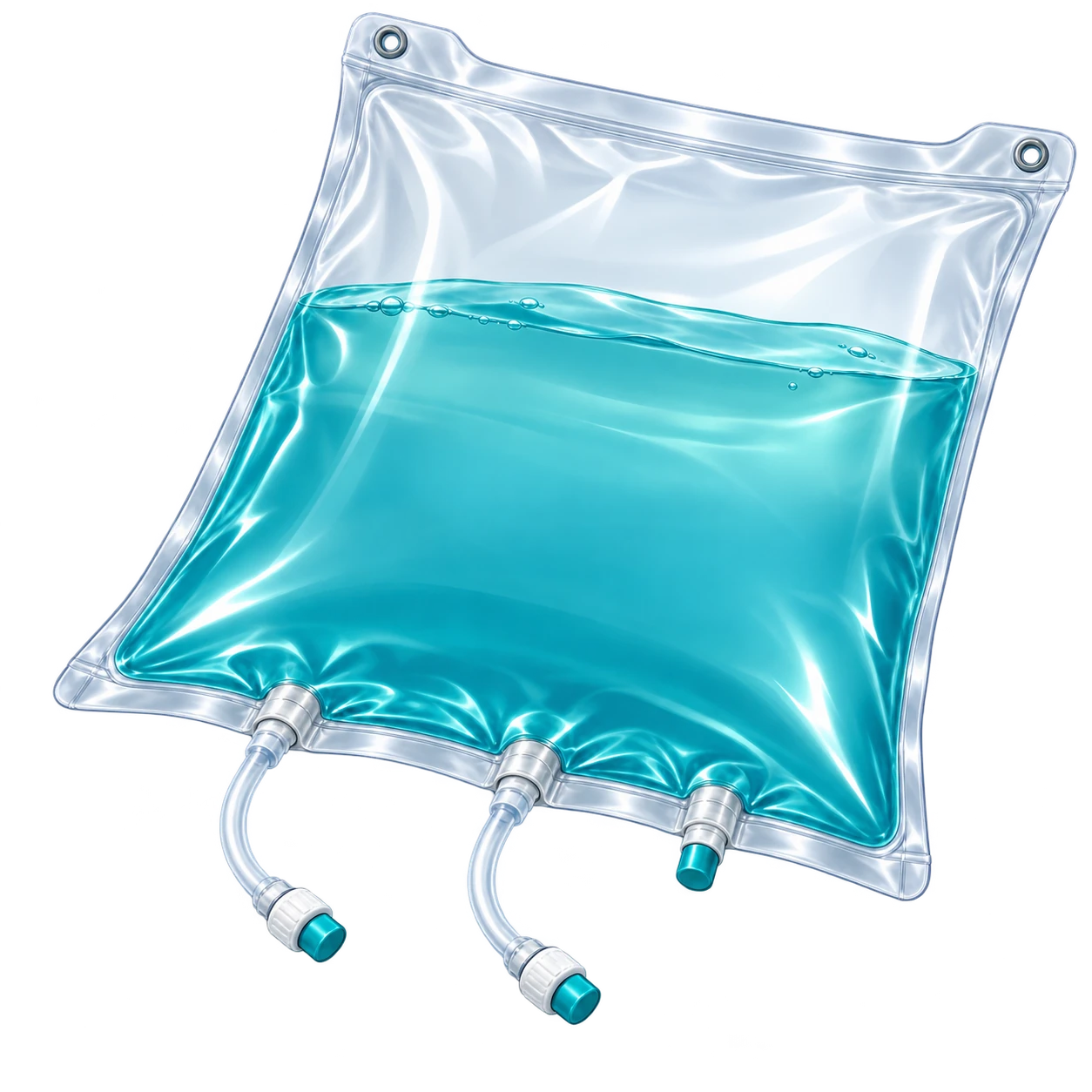
2D single-use bags for dispensing, storing and transferring media, buffer and process intermediates. Review actual fill volume, support and the effect of ports and tubing on drainage.
Review selection pointsDiscuss this applicationReview product locations and fluid paths.
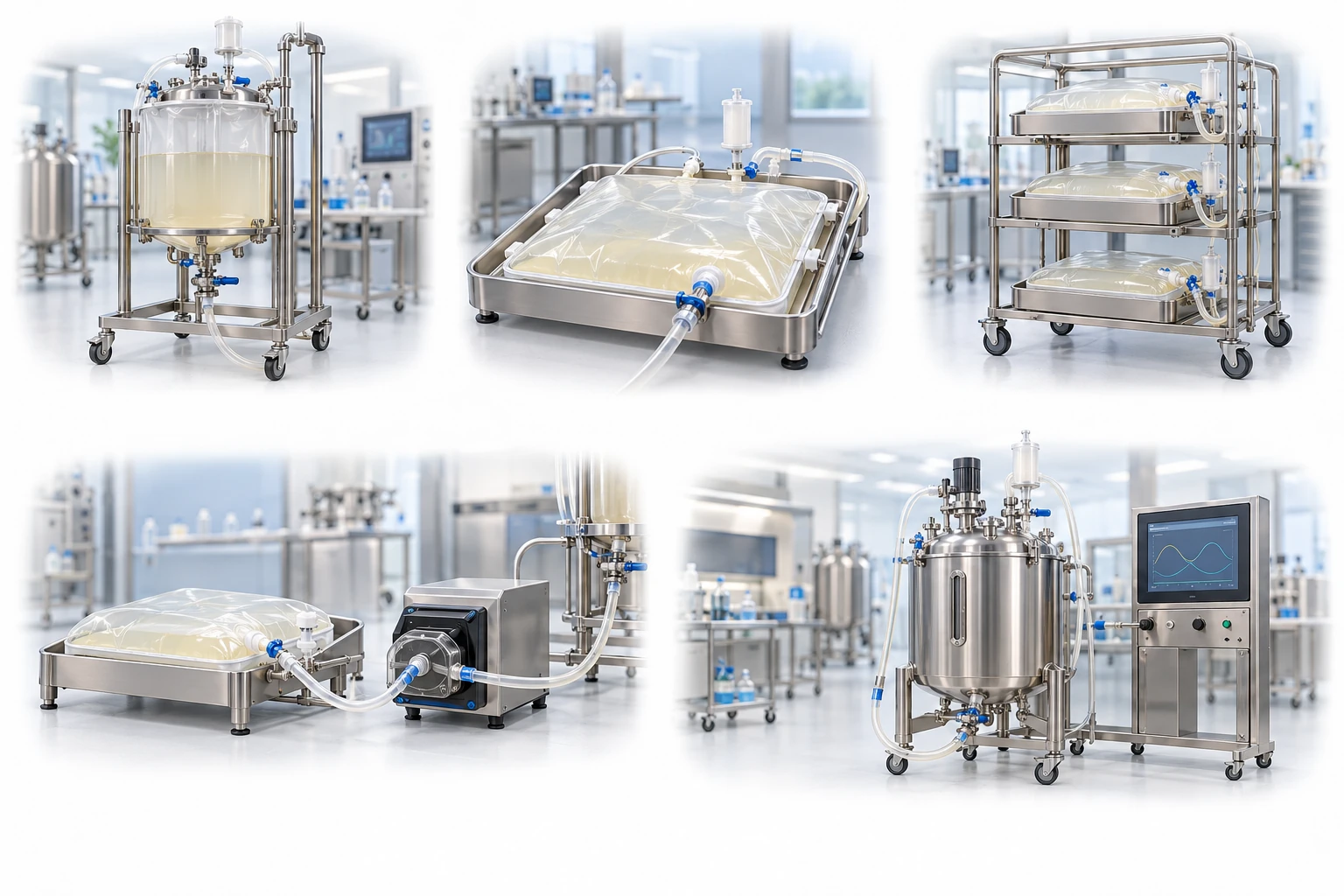
Use supplier-specified trays or hangers. Confirm process-specific fill volume, pressure and handling conditions.
A conceptual illustration created to explain equipment and application locations. It is not an actual product photograph, installation photograph or piping/wiring design.
Scroll horizontally to see the complete flow.
Shows the filling, holding, and draining sequence. Consider upstream filtration if needed. A sterilized bag does not itself sterilize the liquid inside.
These conceptual views explain flow direction. Actual piping, wiring and physical flow rates require a separate design.
Define the intended use and conditions to identify the required role of each item.
Define a filling path and connection method suited to the process, and apply the verification procedures for the bag and its connections.
Place the bag in a tray or on a hanger specified by the manufacturer, and manage folds, compression, time, temperature and lot identification.
Review the bottom drain and tubing route to reduce residual volume, air ingress and damage to connections.
A bag that is flat before filling expands during use. Consider the actual fill volume, support provided by trays or hangers, loads on the ports and working space together, rather than relying on nominal capacity alone.
Scroll horizontally to review all columns.
| Bag or assembly function | Item to review | Selection evidence |
|---|---|---|
| Reliably contain the required volume | Actual fill range | Bag size, orientation during use, support method and permitted fill volume |
| Store sensitive fluids | Film and contact conditions | Fluid pH and protein concentration, contact time and temperature, and evaluation of adsorption and leachables |
| Achieve product recovery | Drain port and tubing | Drain location, tubing inner diameter and length, and residual volume after recovery |
| Transfer through a closed path | Connectors and joining methods | Connection specifications at both ends, tubing welding and sealing suitability, and operating procedures |
Volume or film name alone is insufficient. Review the actual fluid, contact conditions, equipment compatibility and supplier evidence.
Do not lift a filled bag by its tubing or ports; use the specified support device. Also check welds around the ports and tubing for kinks.
Compare concentration and quality before and after storage, and residual volume after draining. Evaluate the fluid-contact surface area of the film and tubing, initial flushing and handling losses together.
The shelf life of an unused bag differs from its permitted hold time after filling. Confirm product stability and the scope of microbial control for the actual formulation, temperature and connection state.
Confirm that the bag, tubing and connectors are suitable for the target temperature and freeze–thaw conditions. Do not apply liquid-storage specifications directly to frozen storage.
It may help with connections, but increases residual volume, kinking and the potential for damage during handling. Set the length based on the distance between equipment and the required recovery.
Also compare fluid-contact materials, approved fill range, sterilization, tubing and connectors, and support conditions. Provide the existing drawing, use conditions and required fluid-contact or extractables and leachables evidence. Confirm residual volume and handling in the actual process.
Share the current configuration and operating conditions to review selection criteria and required evidence. Suitability and supply scope are confirmed for each application.
This page explains selection considerations by application. It is not a commitment to supply every type, size or manufacturer’s product shown. Share the manufacturer and product code, or your configuration requirements, to discuss supply availability and outstanding checks.
Product-type and selection guide · Available configurations: confirm individually
Ask about supply for this configurationMay we use Google Analytics, Google Ads and ChatGPT Ads to measure visits and completed enquiries? Learn more