
Define the intended use
Specify the liquid composition, batch volume, contact time, and temperature, and select the required functions from storage, mixing, culture, freezing, and PUPSIT.
From 2D and 3D storage bags to mixing, culture, freeze-thaw and PUPSIT bags. Define the fluid and application, then review contact materials, connections and equipment compatibility.
Review selection pointsDiscuss this applicationChoose the intended use to review bag form and application conditions.
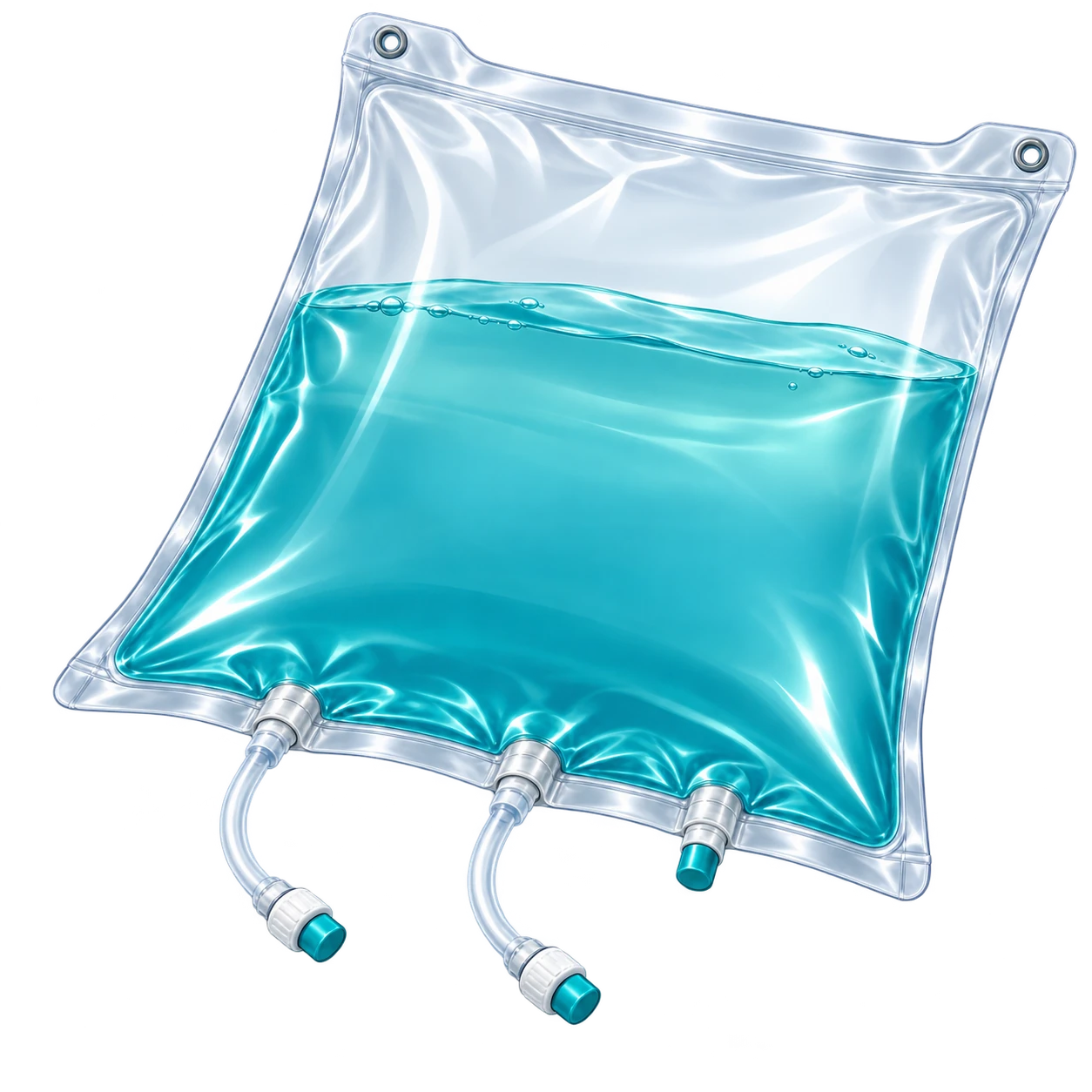 2D Storage & Transfer Bags
2D single-use bags for dispensing, storing and transferring media, buffer and process intermediates. Review actual fill volume, support and the effect of ports and tubing on drainage.
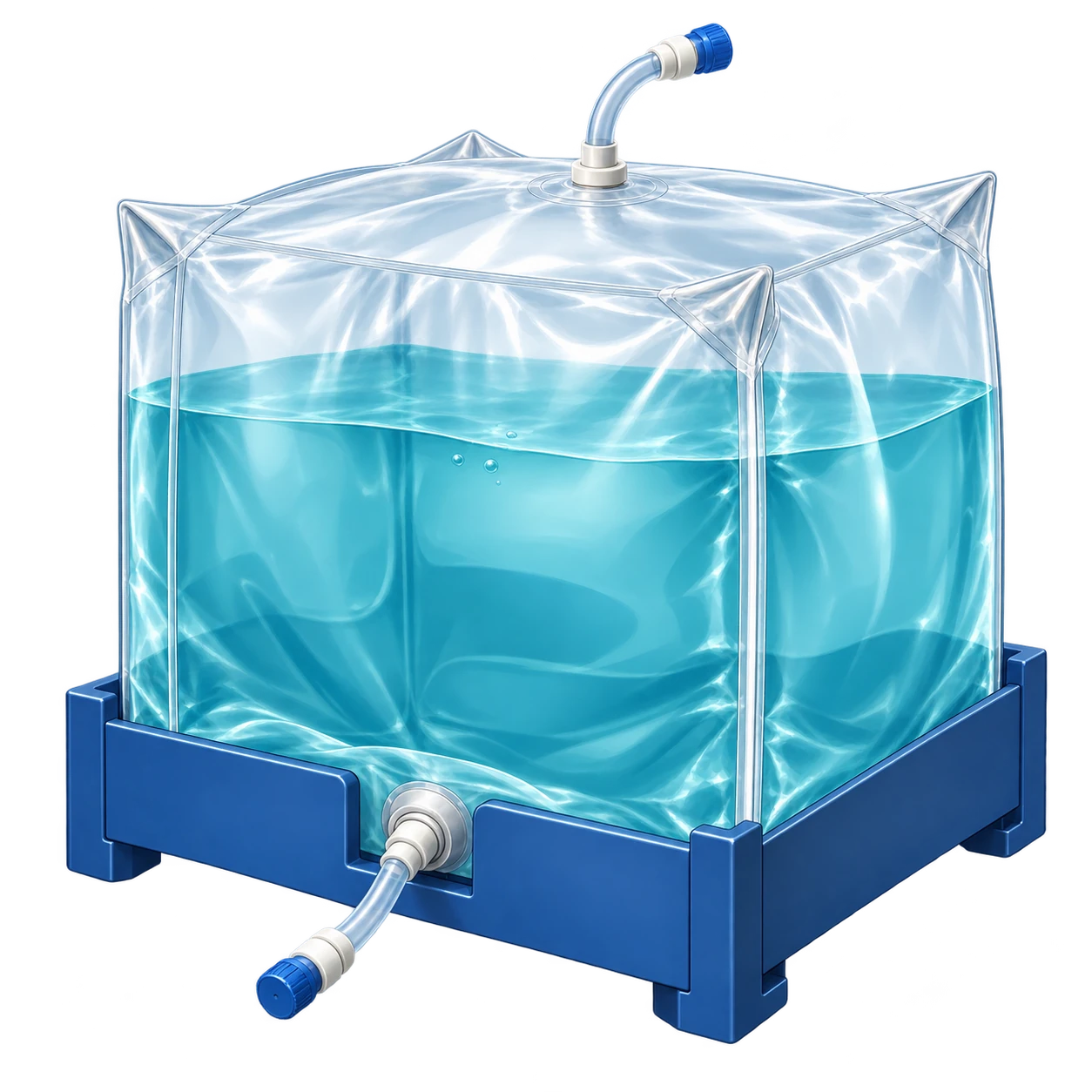 3D Storage & Supply Bags
3D single-use bags for bulk storage and supply of media, buffer and intermediates. Review support-vessel geometry, actual fill range and bottom drainage as one configuration.
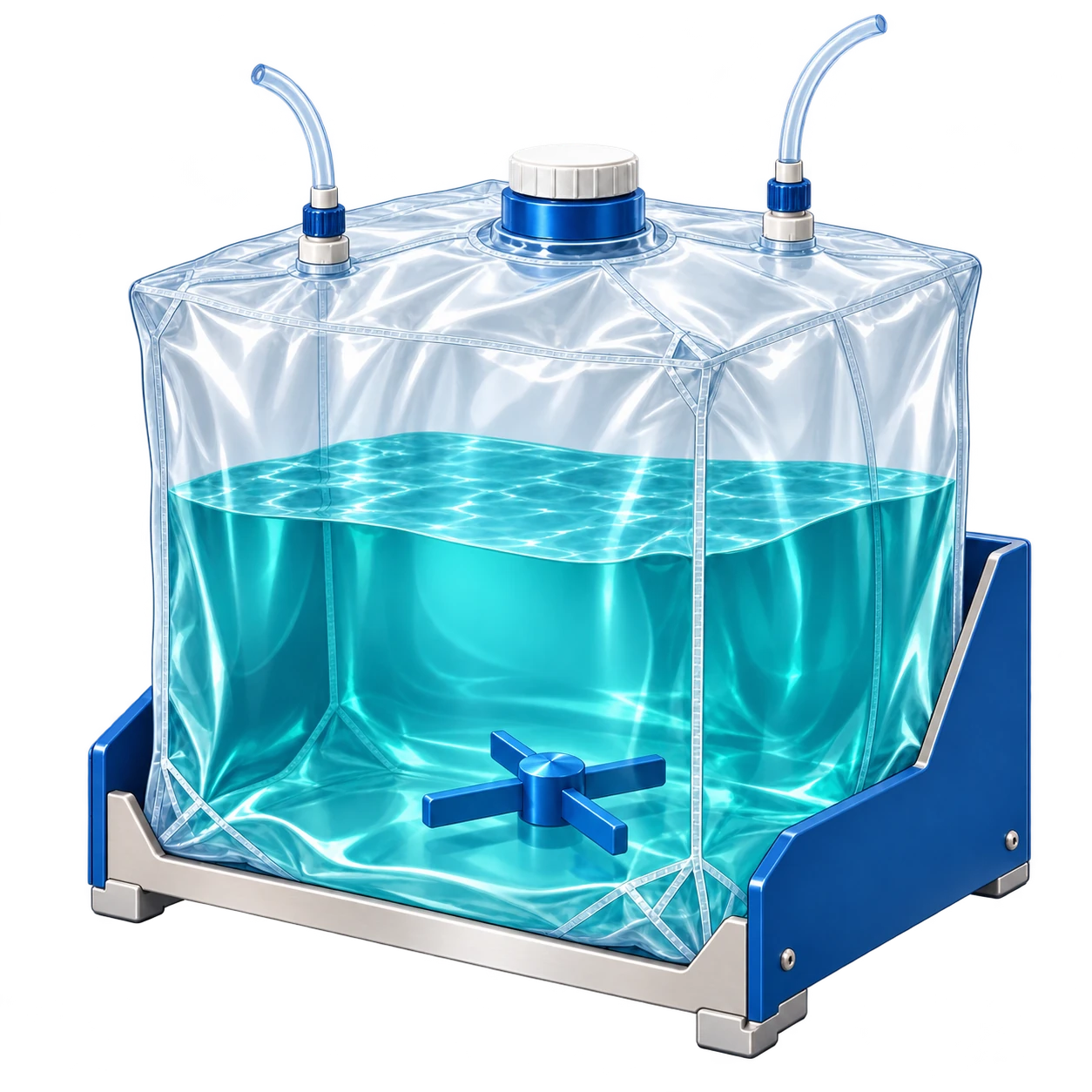 Single-Use Mixing Bags
Bags for dissolving powders and preparing media and buffers. Identify conditions that provide effective mixing while protecting the product.
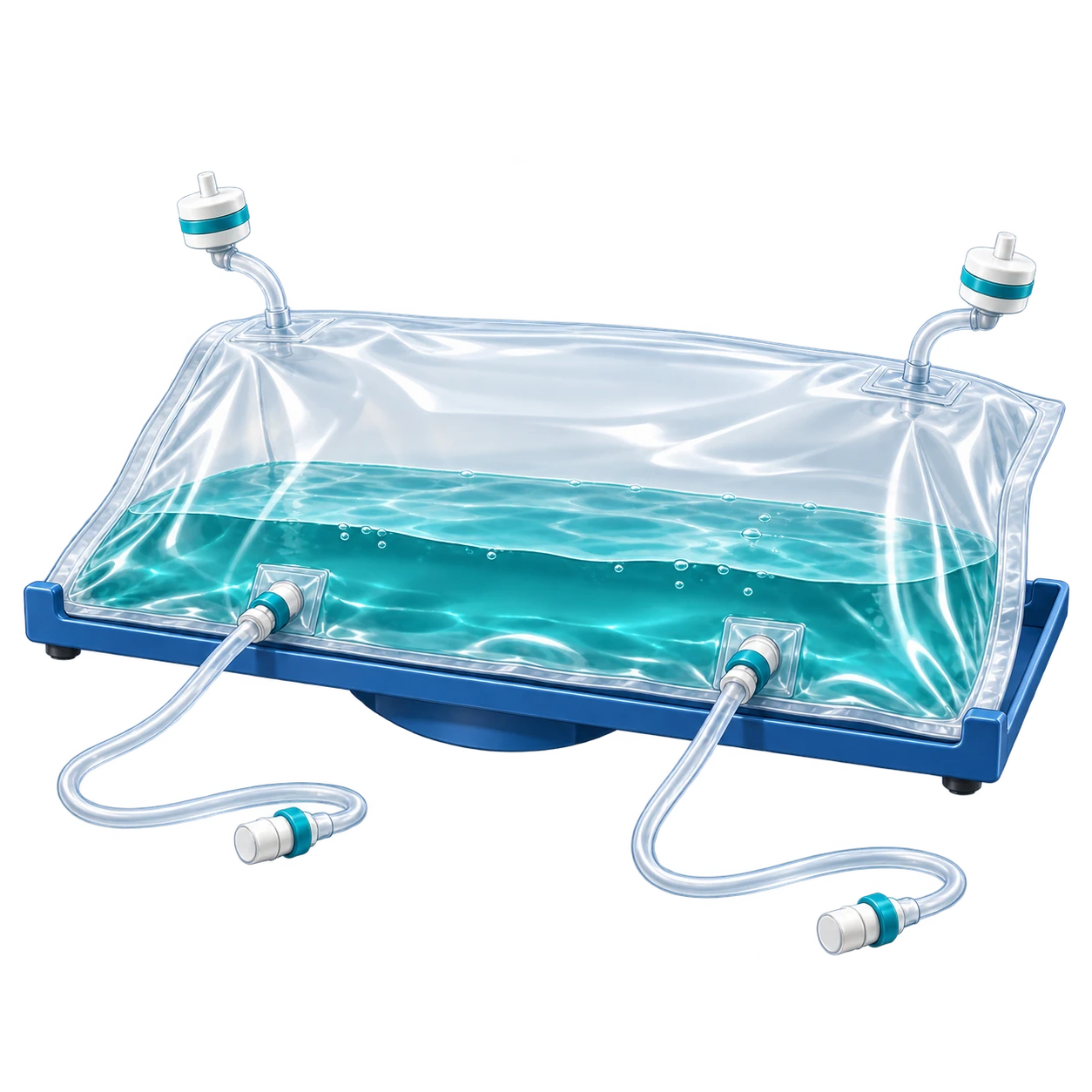 Single-Use Bioreactor Bags
Bags that provide a culture environment for cells. Distinguish rocking and stirred systems, and review gas transfer, cell growth and equipment compatibility.
 Freeze & Thaw Bags
Low-temperature storage and transport of bulk drug substance and process intermediates. Assess the bag’s low-temperature resistance separately from the stability of its contents.
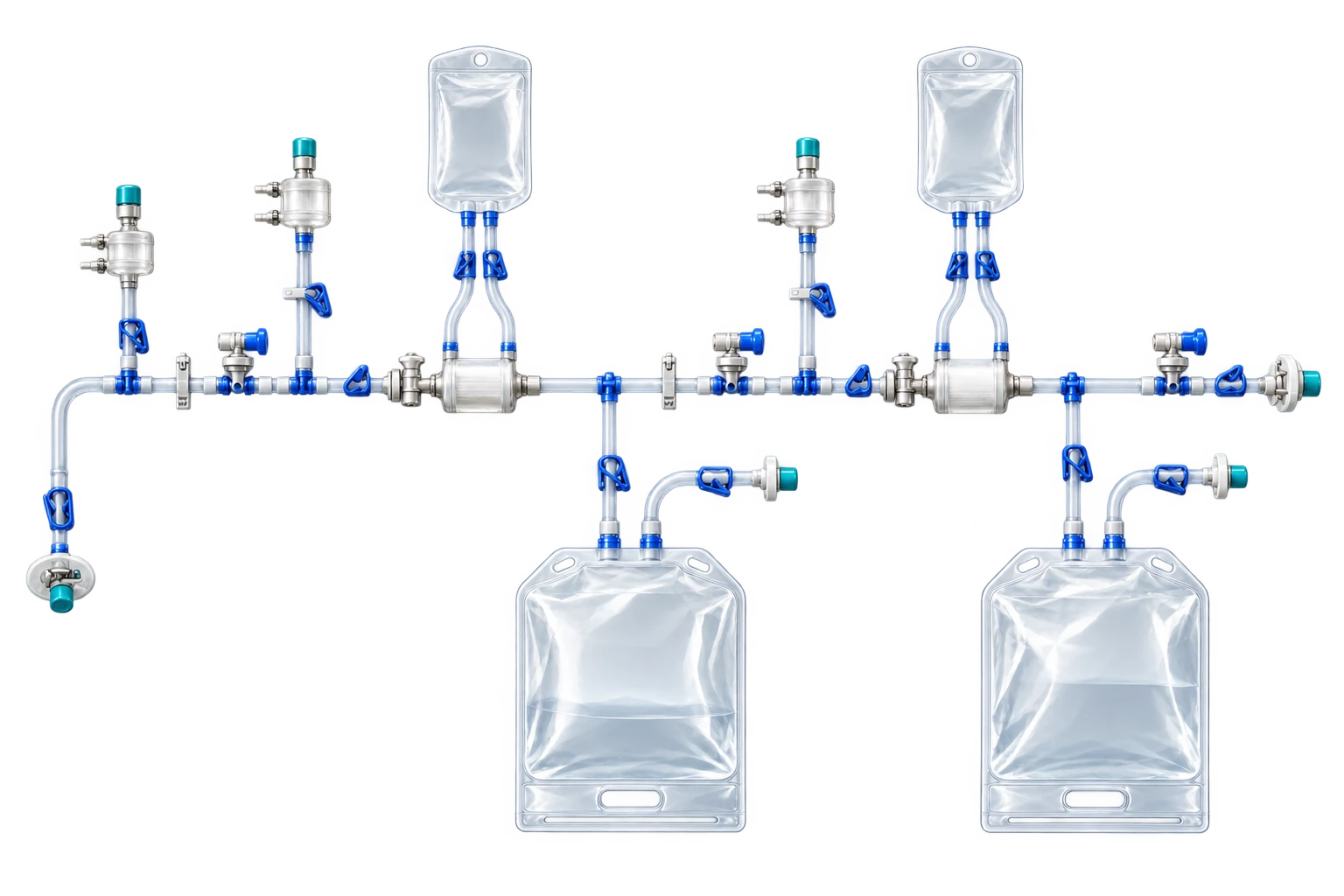 PUPSIT Single-Use Assemblies
Review PUPSIT bags, filters, vents and tubing as a connected assembly. Map the paths for wetting-fluid recovery, filter integrity testing and product filtration.
Review product locations and fluid paths.
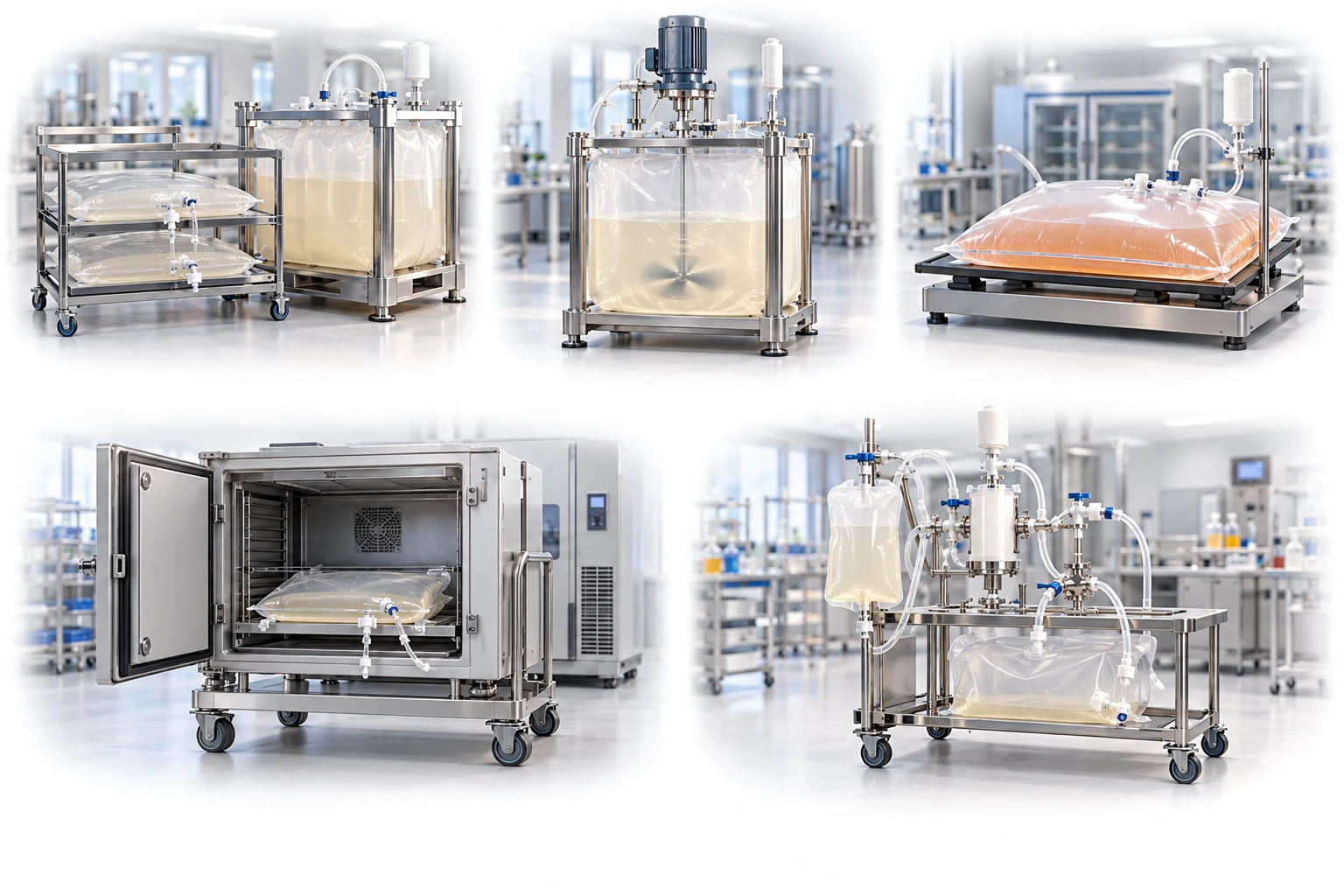
This role map compares bag functions; it is not a serial train connecting all five bag types.
A conceptual illustration created to explain equipment and application locations. It is not an actual product photograph, installation photograph or piping/wiring design.
Scroll horizontally to see the complete flow.
Shows the filling, holding, and draining sequence. Consider upstream filtration if needed. A sterilized bag does not itself sterilize the liquid inside.
Scroll horizontally to see the complete flow.
An example using a bag installed inside a support vessel. Confirm transport suitability of the storage configuration separately. Do not pressurize it arbitrarily.
Scroll horizontally to see the complete flow.
The diagram shows liquid movement and process order. During mixing, check conductivity, pH, undissolved particles, and, when needed, sample uniformity.
Scroll horizontally to see the complete flow.
The product illustration shows a rocking-bag shape as an example. Gas supply, exhaust, and liquid paths are shown separately. For stirred systems, separately check compatibility with the dedicated impeller and drive.
Scroll horizontally to see the complete flow.
Lines show process order, not frozen liquid flowing through piping. Keep the bag closed during freezing and thawing.
Scroll horizontally to see the complete flow.
An example of a collection bag connected to a vent. Liquid collects in the drain bag; gas exits through a separate vent. The product path is isolated at this stage. Review vent wetting and backpressure, actual bag fill volume, and support method.
These conceptual views explain flow direction. Actual piping, wiring and physical flow rates require a separate design.
Define the intended use and conditions to identify the required role of each item.
Specify the liquid composition, batch volume, contact time, and temperature, and select the required functions from storage, mixing, culture, freezing, and PUPSIT.
Use drawings to align the actual fill volume, support container, filling, draining, and sampling ports, and aseptic connection method.
Review material, sterilization, and leak-related documentation, and evaluate the stability and recovery of the actual liquid and the handling conditions.
First distinguish whether the liquid is a medium or buffer, a process intermediate, or bulk product. Review the wetted film and tubing, welds, ports, and external support container as a single system.
Scroll horizontally to review all columns.
| Bag or assembly function | Item to review | Selection evidence |
|---|---|---|
| Aliquoting and transfer of media and buffers | 2D storage bags | Fill volume, mounting arrangement, residual volume, and tubing length |
| Large-volume storage and supply | 3D storage bags + support containers | Bag and container dimensions, bottom drainage, and installation and transport conditions |
| Powder dissolution and blending | Mixing bags + dedicated drive units | Working volume range, mixing time, bubbles, shear, and sensors |
| Cell expansion and culture | Culture bags + culture equipment | Cell characteristics, gas transfer, pH and DO, and culture method |
| Low-temperature storage and transport of bulk product | Freeze–thaw bags + protective enclosures | Allowable temperature, product temperature history, expansion during freezing, and transport validation |
| Collection of filter wetting fluid and venting during testing | Single-use bags for PUPSIT | Collection volume, venting and backpressure, ports and tubing, and the sterile boundary |
Volume or film name alone is insufficient. Review the actual fluid, contact conditions, equipment compatibility and supplier evidence.
Check the materials of the contact layer, tubing, connectors, and seals. Evaluate extractables data against the process liquid, temperature, and time, and follow with testing of actual leachables where needed.
Review the scope and detection limits of bag and assembly tests and the post-installation verification procedures. Bag leak testing does not replace integrity testing of sterilizing filters.
Check the product code and drawings, wetted component list, lot traceability, sterilization-related certification, shelf life, and change notification conditions together.
In addition to capacity, the external dimensions, port locations, tubing and connectors, support container, and fit with the equipment must match. If materials or sterilization conditions change, also assess whether the existing evaluation remains applicable.
No. The bag’s sterile status and microbial control of the contents are separate matters. Define any necessary treatment, such as upstream filtration, aseptic connections, and subsequent storage conditions for the process.
Please provide the current manufacturer, product code and drawings, and the purpose of the change. Supply availability, equipment compatibility, and the required scope of evaluation are checked individually.
Start with dispensing, transfer or storage duties and the support arrangement as well as volume. For 2D bags, review trays or hangers, port loading and residual volume. For 3D bags, review vessel geometry, bag deployment and bottom drainage. Mixing, culture and freeze-thaw need bags assessed for those duties and equipment.
Share the current configuration and operating conditions to review selection criteria and required evidence. Suitability and supply scope are confirmed for each application.
This page explains selection considerations by application. It is not a commitment to supply every type, size or manufacturer’s product shown. Share the manufacturer and product code, or your configuration requirements, to discuss supply availability and outstanding checks.
Product-type and selection guide · Available configurations: confirm individually
Ask about supply for this configurationDocument availability and scope depend on the manufacturer, product code and configuration. Tell us which documents you need and the purpose of your review.
Availability and disclosure scope: confirm individually
This list does not guarantee that documents are held or available. Evaluation and approval for the actual process remain subject to the customer’s quality procedures.
Ask about required documentsCompare connection, operating and documentation requirements against the current product code and reason for replacement. Separate verified matches from items needing more evidence or evaluation. Nominal volume or pore size alone does not establish equivalence.
Review the role of film gas permeability when assessing process-fluid storage conditions.
Selection, replacement or quantity and lead-time review. Start with the information you have.
May we use Google Analytics, Google Ads and ChatGPT Ads to measure visits and completed enquiries? Learn more