
Installation, medium and inoculation
Install the bag in its dedicated tray or vessel, and check connection paths, sensors, medium and inoculation conditions.
Bags that provide a culture environment for cells. Distinguish rocking and stirred systems, and review gas transfer, cell growth and equipment compatibility.
Review selection pointsDiscuss this applicationReview product locations and fluid paths.
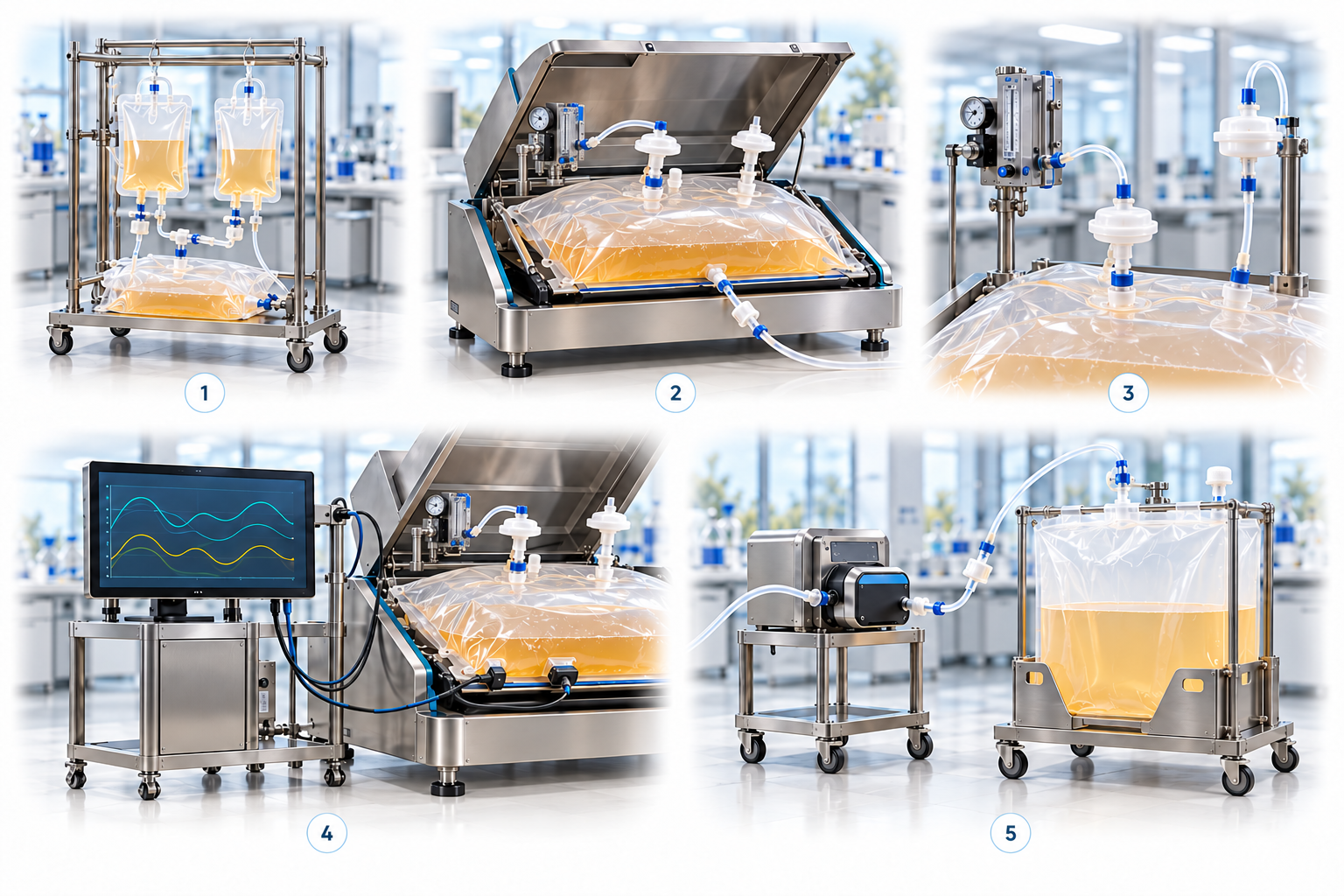
Media, inoculum and harvest transfer are illustrated within closed bags and tubing. Gas supply and exhaust have distinct roles and should not be interpreted as one recirculation line. The image does not validate actual sensor/gas routing or any supplied product’s exterior, ports, sterility or performance. Rocking and stirred systems use different dedicated hardware. Verify bag/film, connections, gas filters and platform compatibility from documentation. Display traces are illustrative.
A conceptual illustration created to explain equipment and application locations. It is not an actual product photograph, installation photograph or piping/wiring design.
Scroll horizontally to see the complete flow.
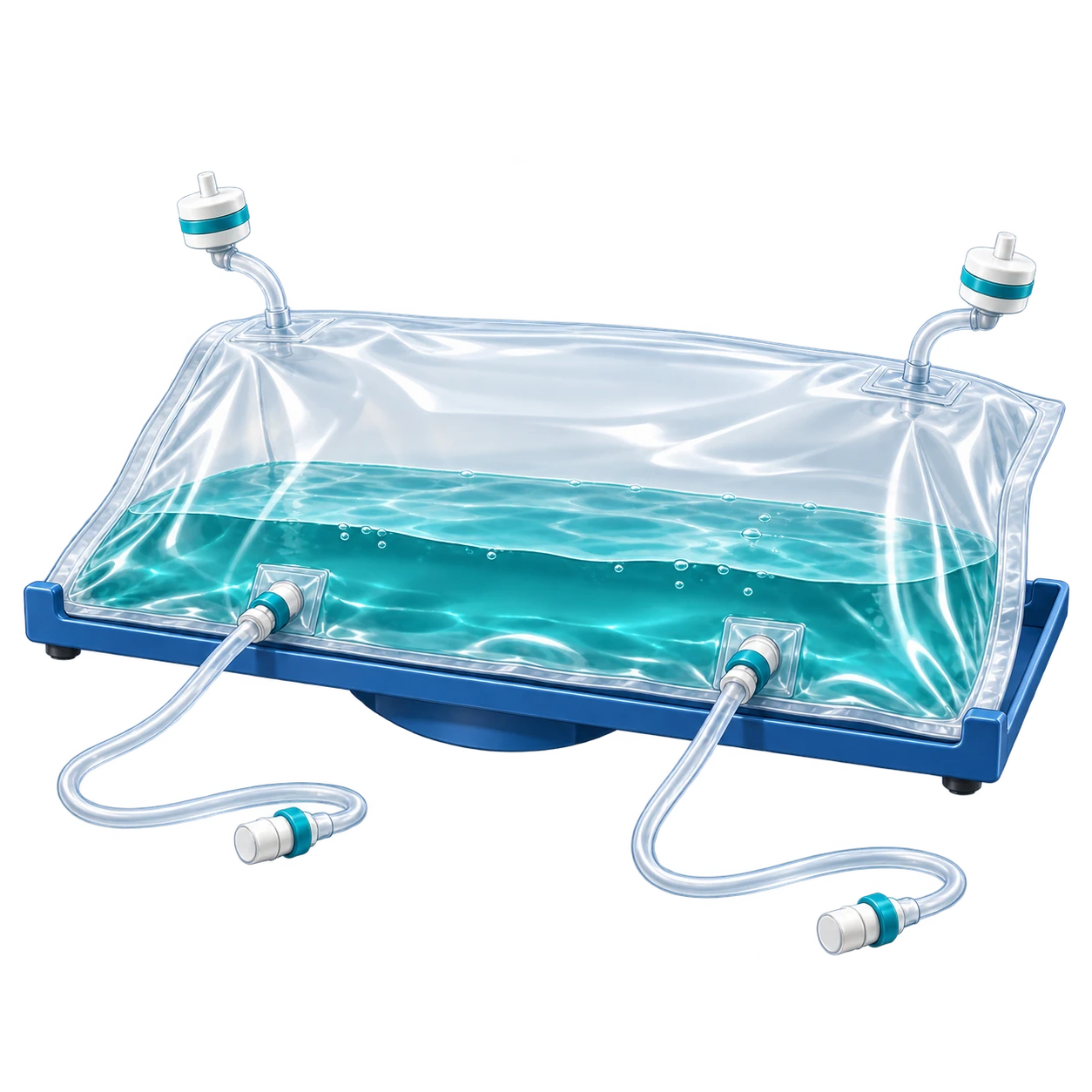
The product illustration shows a rocking-bag shape as an example. Gas supply, exhaust, and liquid paths are shown separately. For stirred systems, separately check compatibility with the dedicated impeller and drive.
These conceptual views explain flow direction. Actual piping, wiring and physical flow rates require a separate design.
Define the intended use and conditions to identify the required role of each item.
Install the bag in its dedicated tray or vessel, and check connection paths, sensors, medium and inoculation conditions.
Manage rocking or stirring, temperature, gas supply and exhaust, and monitor pH, dissolved oxygen (DO) and growth.
Define the harvest path and transfer conditions to suit the intended recovery of cells or culture fluid.
A bioreactor bag is more than a storage vessel. Select bag geometry, gas supply and exhaust, mixing, sensors and culture equipment together to suit the cells and culture method.
Scroll horizontally to review all columns.
| Bag or assembly function | Item to review | Selection evidence |
|---|---|---|
| Select the culture method | Rocking or stirred | Suspension or adherent culture, working volume, and the combination of culture equipment and bag |
| Gas transfer and exhaust | Gas supply path | Oxygen demand, CO₂ removal, exhaust filters, and condensation and pressure management |
| Monitor culture conditions | pH, DO and temperature | Compatibility of sensor ports, optical patches and readers, and calibration and verification procedures |
| Maintain cell growth and yield | Effects of film and sterilization | Growth comparisons for the cells used, medium contact conditions, and extractables and leachables evaluation |
| Scale up culture | Compare processes across scales | Changes in mixing, gas transfer and shear, and indicators of cell growth and quality |
Volume or film name alone is insufficient. Review the actual fluid, contact conditions, equipment compatibility and supplier evidence.
Increased exhaust resistance can affect bag pressure. Adapt gas flow, condensation management, alarms and response procedures to the equipment conditions.
Changes in fluid-contact film, additives, sterilization conditions and storage duration can affect cells. A comparative evaluation of the actual cell and medium combination is required.
Check tray attachment, rocking settings, impeller and drive, and sensor locations. Do not assume a bioreactor bag is a universal replacement component.
Rocking systems mix fluid through tray motion; stirred systems use an impeller. Their mixing and gas-transfer mechanisms differ, so select according to the cells, scale and equipment.
Suitability for storage does not establish suitability for culture. A culture configuration with assessed gas transfer, mixing, cell growth, sensors and sterile boundary is required.
These details help narrow the configuration and the evidence to review.
This page explains selection considerations by application. It is not a commitment to supply every type, size or manufacturer’s product shown. Share the manufacturer and product code, or your configuration requirements, to discuss supply availability and outstanding checks.
Product-type and selection guide · Available configurations: confirm individually
Ask about supply for this configurationMay we use Google Analytics, Google Ads and ChatGPT Ads to measure visits and completed enquiries? Learn more