
Characterize the feed
Analyze fat, protein, and total solids in raw milk, skim milk, or whey.
Microbial reduction and protein concentration require different filtration approaches. Define the final product and the components to recover first.
Review selection pointsDiscuss this applicationReview product locations and fluid paths.
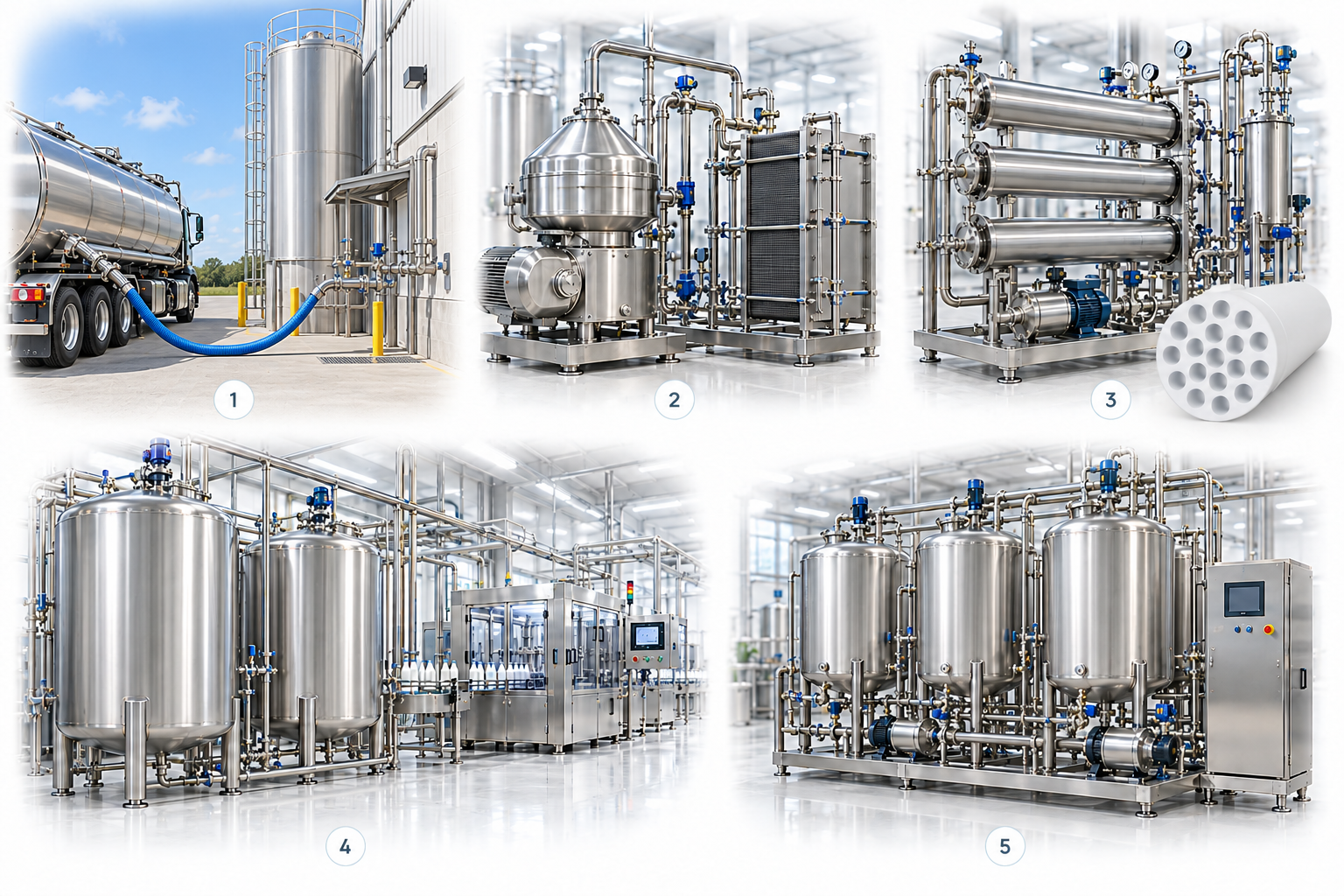
An illustrative installed context informed by manufacturer product exteriors, not an actual product/installation photograph or piping design. Ceramic elements and installed housings are distinct; dimensions, channel counts and ports are not specifications. Confirm protein retention and lactose passage for the selected UF grade and conditions. UF alone does not guarantee a final lactose-free product. MF, NF and RO are separately selected for their purpose, not the same product or mandatory serial stages. CIP is a cleaning mode separate from production.
A conceptual illustration created to explain equipment and application locations. It is not an actual product photograph, installation photograph or piping/wiring design.
Scroll horizontally to see the complete flow.
Concept diagram of UF concentration. Separation depends on product composition and membrane properties. UF alone does not establish that the finished product is lactose-free.
Scroll horizontally to see the complete flow.
An MF example for microbial-load reduction. Check reduction performance for each feed composition, membrane, and operating condition, together with subsequent heat treatment. The permeate is the treated liquid; microbes and particles concentrate in the retentate.
Scroll horizontally to see the complete flow.
Salt passage and retention depend on ion type, membrane, and feed conditions. Retained components concentrate in the retentate. Confirm actual selectivity and cleanability through testing.
Scroll horizontally to see the complete flow.
An example of RO concentration. Review osmotic pressure, maximum concentration, and membrane fouling using the actual feed.
These conceptual views explain flow direction. Actual piping, wiring and physical flow rates require a separate design.
Define the intended use and conditions to identify the required role of each item.
Analyze fat, protein, and total solids in raw milk, skim milk, or whey.
Evaluate MF, UF, NF, and RO for microbial reduction, protein fractionation and concentration, or water removal.
Assess composition, microbiology, and storage stability in conjunction with downstream heat treatment, blending, and filling.
First distinguish whether the aim is to reduce the microbial load in drinking milk, recover whey proteins, or adjust the composition of lactose and minerals. Rather than filtering all raw milk under the same conditions, check whether it is skimmed and determine its fat and protein content.
Scroll horizontally to review all columns.
| Process objective | Step to review | Selection evidence |
|---|---|---|
| Microbial load reduction | MF suitability | Microbial reduction performance with the actual feed, such as skim milk; temperature and membrane fouling |
| Protein concentration | UF / DF | Recovery, lactose and mineral passage, and target protein concentration |
| Component fractionation | MF or UF combinations | Selectivity for casein and whey proteins; composition of each fraction |
| Concentration and partial demineralization | RO / NF | Salt rejection, osmotic pressure, concentration limits, and cleanability |
These examples start the application review. Pore size or nominal rating alone does not establish suitability or retention; confirm with the actual process fluid and supplier evidence.
Record permeate flux and transmembrane pressure (TMP) together over time. Before increasing pressure, compare feed temperature, protein deposition, and recovery after cleaning.
Combine fat, protein, and lactose analysis with sensory evaluation. Even when filtration reduces microorganisms, downstream recontamination and distribution conditions require separate controls.
Include CIP time, chemical consumption, membrane life, and conditions for reuse in the assessment of batch processing time.
Lactose passes into the permeate in many UF processes, but the residual amount depends on the process. Design the full process, including DF, enzyme treatment, and blending as appropriate, and analyze lactose in the finished product.
It does not automatically replace it. Consider the product type, microbial risk, process validation, and applicable manufacturing requirements together.
These details help narrow the configuration and the evidence to review.
Confirm model suitability and supply scope through a technical review. Use each card to make an enquiry or review official manufacturer information.
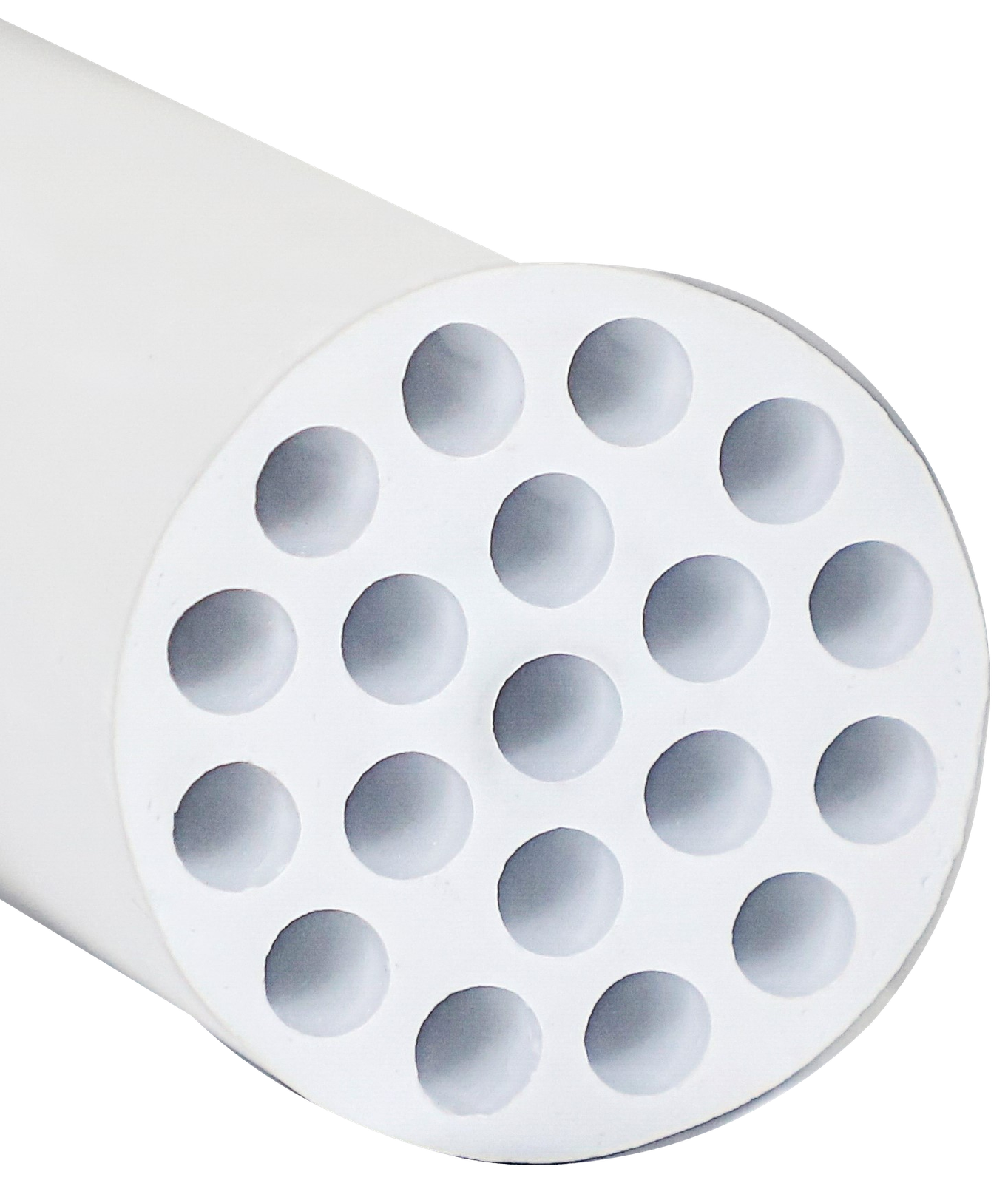
Detail photograph of the Megaflux-CRM ceramic membrane family. Confirm the dairy-UF grade/MWCO and actual supplied configuration separately.
A ceramic-membrane family to evaluate for the UF stage of lactose-free milk production. Confirm the dairy-UF grade/MWCO, protein retention and lactose passage, required later steps and final residual lactose.
Enquire about this productOfficial manufacturer product information ↗Manufacturer dairy-UF application article ↗Product photographs and manufacturer images use permitted official materials and source links. Original explanatory schematics are identified separately from actual product photographs.
May we use Google Analytics, Google Ads and ChatGPT Ads to measure visits and completed enquiries? Learn more