
Final filtration of beer, wine, and similar products
Compare the condition of membranes used for microbial reduction or removal with validated criteria.
Review integrity testers for liquid membrane and gas or vent filters in food and beverage processes. Confirm filter-specific limits, hygienic connections and production-restart procedures.
Review selection pointsDiscuss this applicationCompare the condition of membranes used for microbial reduction or removal with validated criteria.
Define test timing according to product-specific control objectives and sanitization and production cycles.
Check whether the hydrophobic membrane can be tested and the conditions for returning the gas line to hygienic service.
Review product locations and fluid paths.
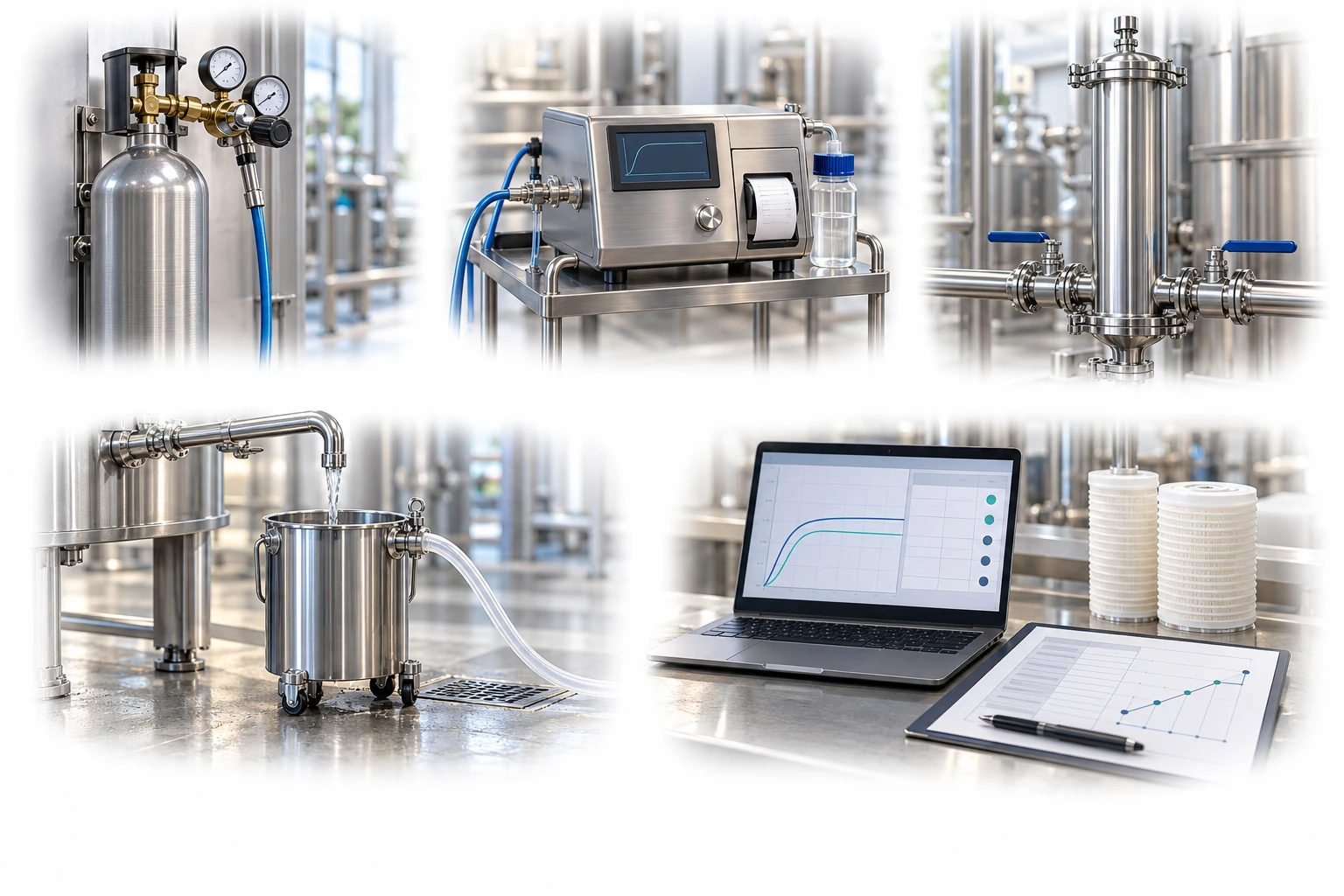
Production is inactive in the test view. Verify the method, wetting liquid, upstream volume, temperature and filter-specific limit, then apply the hygienic return-to-service procedure. Review the method-specific connections and principles below for bubble point, pressure hold and water intrusion.
A conceptual illustration created to explain equipment and application locations. It is not an actual product photograph, installation photograph or piping/wiring design.
Scroll horizontally to see the complete flow.
Evaluate gas diffusion through a wetted membrane at a validated differential pressure below its bubble point. Depending on the instrument, flow is measured directly or calculated from upstream volume and pressure change. Confirm filter-specific fluid, gas, temperature, area, limits and the downstream boundary.
Scroll horizontally to see the complete flow.
Increase upstream pressure on the wetted filter and evaluate the change in gas flow as wetting liquid is displaced from the largest pores. Detection depends on the instrument and filter. Confirm the validated fluid, temperature, pressure range and minimum acceptance criterion.
Scroll horizontally to see the complete flow.
After pressurization and stabilization, isolate the gas supply and evaluate upstream pressure change over time. Upstream volume, filter diffusion, system leakage and temperature affect the result. Follow validated limits, measurement time and sterile-boundary controls.
Scroll horizontally to see the complete flow.
Cover the upstream side of an applicable hydrophobic filter with validated water and evaluate the measurement associated with water intrusion or water transfer at the defined pressure. Confirm instrument measurement/calculation and filter, housing, volume and temperature limits. The view does not represent bulk water being forced through the membrane.
These conceptual views explain flow direction. Actual piping, wiring and physical flow rates require a separate design.
Define the intended use and conditions to identify the required role of each item.
Check the filter to be tested, whether the membrane is hydrophilic or hydrophobic, the test liquid and gas, and sterilization history.
Connect, wet, and stabilize according to the approved procedure, then measure using the program for the filter concerned.
Check limits, raw data, filter and batch identification, and operation history. Investigate failures according to the established procedure.
Automatic integrity testers measure changes in gas flow and pressure and compare them with validated criteria for the filter concerned. Evaluate equipment against the filter type, test method, connection configuration, and record requirements.
Scroll horizontally to review all columns.
| Test method | English designation | Principle and conditions |
|---|---|---|
| Diffusion flow test | Diffusion / Forward Flow | Measure gas flow when a defined differential pressure is applied to a wetted filter. Check the test liquid, area, gas, temperature, and limits for the filter concerned. |
| Bubble point test | Bubble Point | Detect the pressure at which wetting liquid is displaced from the membrane's largest pores and gas flow increases. Check wetting conditions and the validated method for the filter concerned. |
| Pressure hold or decay test | Pressure Hold / Decay | Evaluate pressure changes in the closed upstream side. Check upstream volume, system leakage, temperature, and the correlation criteria for the filter concerned. |
| Water intrusion test | Water Intrusion Test · WIT | Use water to test suitable hydrophobic gas and vent filters. Check the filter, area, housing, and scope of applicability of the validated method. |
Use acceptance limits validated for the specific filter, test fluid, gas, temperature, area and actual configuration. Instruments differ in supported methods and features.
Check the required test methods, filter area and count, test volume, pressure and flow ranges, and measurement performance. Not every instrument supports every test method.
Check test gas quality, filter connections, prevention of liquid backflow, and the exhaust path. Define the drainage and sanitization procedures needed to return to production after testing, as well as the hygienic boundary.
Link results to the filter, housing, and production batch. Define program change permissions, log retention, calibration, and on-site inspection methods.
The test assesses the condition of the filter and assembly under validated conditions. It does not replace microbial retention validation, hygiene and aseptic control of the entire process, or product quality assessment.
Insufficient wetting, connection leakage, temperature changes, and incorrect settings can also cause failure. Preserve the initial result and make the decision according to approved investigation and retest procedures.
It is not applied uniformly in the same way. Define test timing and criteria according to the product's microbial control objectives, filter retention performance, sanitization method, and site quality procedures.
List each line’s filters, test methods, connections and test schedule. Compare gas quality, liquid-backflow controls, drainage, sanitization and production-restart procedures. Define records that link each result to the filter, housing and production batch. Suitability for shared use depends on the reviewed configuration and procedures.
Share the current configuration and operating conditions to review selection criteria and required evidence. Suitability and supply scope are confirmed for each application.
Confirm model suitability and supply scope through a technical review. Use each card to make an enquiry or review official manufacturer information.
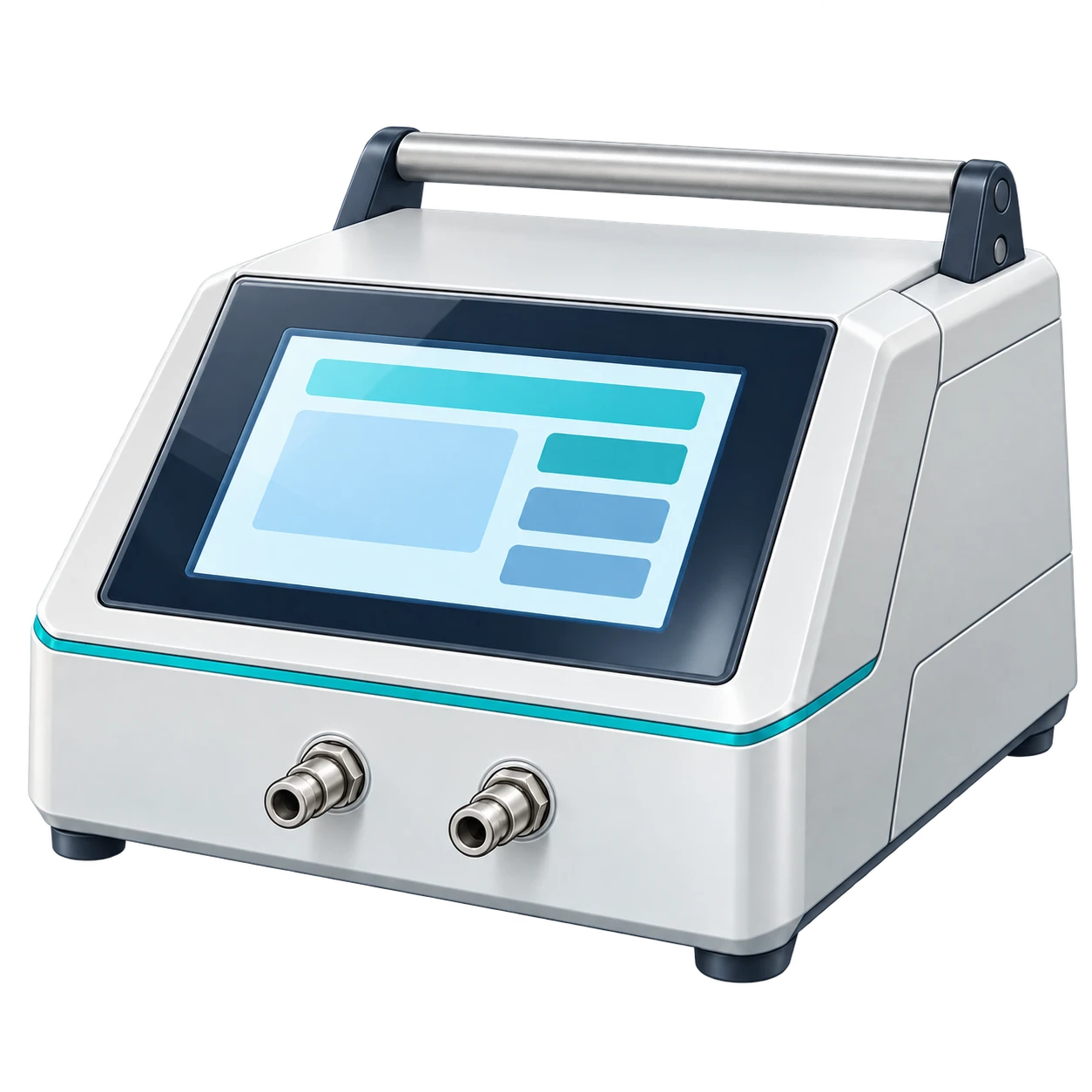
 Conceptual schematic · not an actual product photo
An original schematic of the pressure-hold test principle. It does not show the manufacturer’s actual equipment, supplied configuration or test procedure. Confirm food-and-beverage filter/test conditions; pharmaceutical suitability and qualification require separate validation evidence.
The manufacturer presents this configuration for pressure-hold testing of sterilizing membrane filters in food and beverage production. Confirm the filter and test conditions against item-specific documentation.
Enquire about this productManufacturer company information ↗Product photographs and manufacturer images use permitted official materials and source links. Original explanatory schematics are identified separately from actual product photographs.
May we use Google Analytics, Google Ads and ChatGPT Ads to measure visits and completed enquiries? Learn more