
Ingredient feed
Check undissolved particles, fermentation residues, and foreign matter.
Separate product filtration for soy sauce, vinegar, and edible oils from hygiene control for water, air, and steam.
Review selection pointsDiscuss this applicationReview product locations and fluid paths.
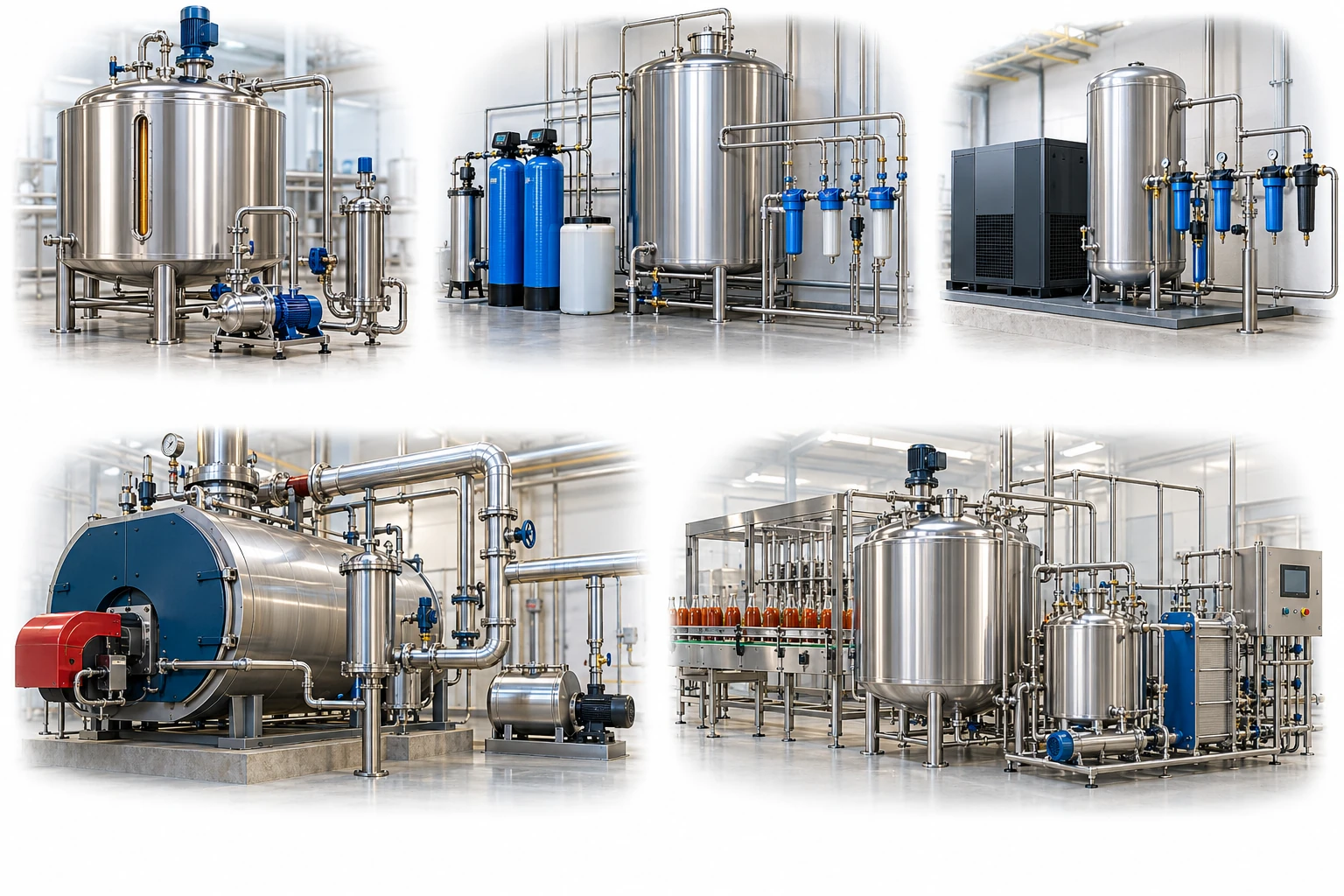
Ingredients, cleaning water, pneumatic air and product-contact gases have different quality targets and connection points. Steam particle filtration does not qualify the steam-generation process.
A conceptual illustration created to explain equipment and application locations. It is not an actual product photograph, installation photograph or piping/wiring design.
Scroll horizontally to see the complete flow.
Liquid ingredients, edible oils, and steam each require different configurations. This diagram is an example of process-gas treatment; validate the microbial barrier separately.
These conceptual views explain flow direction. Actual piping, wiring and physical flow rates require a separate design.
Define the intended use and conditions to identify the required role of each item.
Check undissolved particles, fermentation residues, and foreign matter.
Test media suited to viscosity, temperature, and removal objectives.
Check the quality and points of use of contact water, compressed air, gases, and steam.
Processing temperature and pressure drop are important for viscous ingredients, while the contaminant types and points of contact are important for utilities that contact food. Review the flow paths of fluids that affect final quality together.
Scroll horizontally to review all columns.
| Process objective | Step to review | Selection evidence |
|---|---|---|
| Soy sauce and vinegar | Residue and particle filtration | Salt content, acidity, color adsorption, and chemical resistance |
| Edible oils and fats | Filtration with temperature control | Viscosity, oxidation, waxes, and filter aid residues |
| Air, N₂, and CO₂ | Staged gas treatment | Configuration with separate controls for particles, moisture, oil, and microorganisms |
| Process water and steam | Point-of-use protection | Whether food contact occurs; steam quality, condensate, and corrosion particles |
These examples start the application review. Pore size or nominal rating alone does not establish suitability or retention; confirm with the actual process fluid and supplier evidence.
Gas flow specifications differ according to whether actual or standard conditions are used. Specify pressure, temperature, and allowable differential pressure.
Check suitability documentation for the product, material, and operating temperature, together with compatibility with cleaning chemicals.
Include retained product losses, cleaning, replacement downtime, and throughput in addition to filter price.
Membranes for microorganisms and particles serve a different role from media for oil vapor removal. Configure pretreatment for each contaminant type.
Particle removal is separate from steam chemical quality, dryness, and the method of generation. Review the entire steam system.
These details help narrow the configuration and the evidence to review.
Confirm model suitability and supply scope through a technical review. Use each card to make an enquiry or review official manufacturer information.
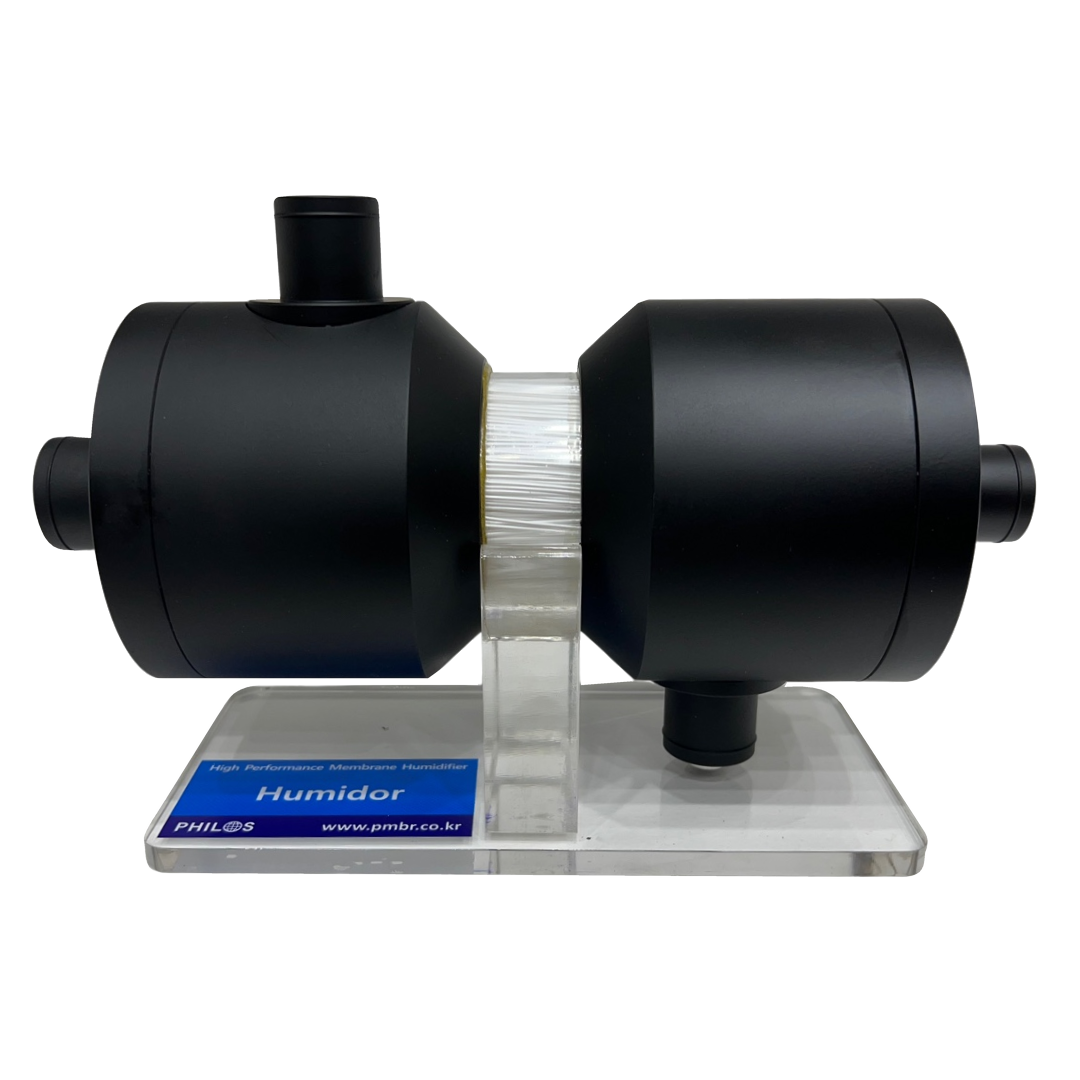
Manufacturer photograph of a display model showing the internal hollow fibers. Confirm the form and supply configuration of the operating module separately.
A hollow-fiber membrane humidifier transferring moisture from water or wet gas to air or gas.
Enquire about this productOfficial manufacturer product information ↗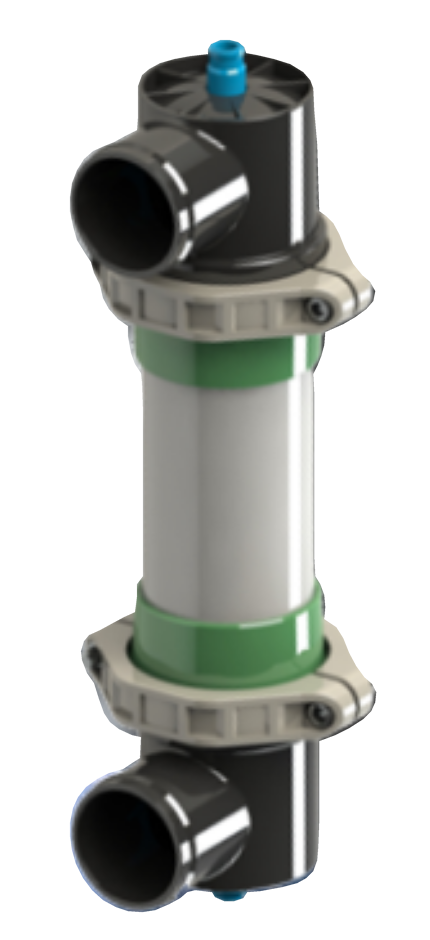
Manufacturer-supplied product image (3D). Confirm the supplied model’s form, connections and operating range in manufacturer documentation.
A membrane dryer presented by PHILOS for compressed-air drying. Confirm flow, inlet conditions, target pressure dew point and pretreatment for the selected model.
Enquire about this productManufacturer product explanation ↗Product photographs and manufacturer images use permitted official materials and source links. Original explanatory schematics are identified separately from actual product photographs.
May we use Google Analytics, Google Ads and ChatGPT Ads to measure visits and completed enquiries? Learn more