
Juice base and syrup
Determine solids, sugar content, pectin, particles, and viscosity.
Distinguish products that retain pulp from clear products, and also check syrup, water, and gases.
Review selection pointsDiscuss this applicationReview product locations and fluid paths.
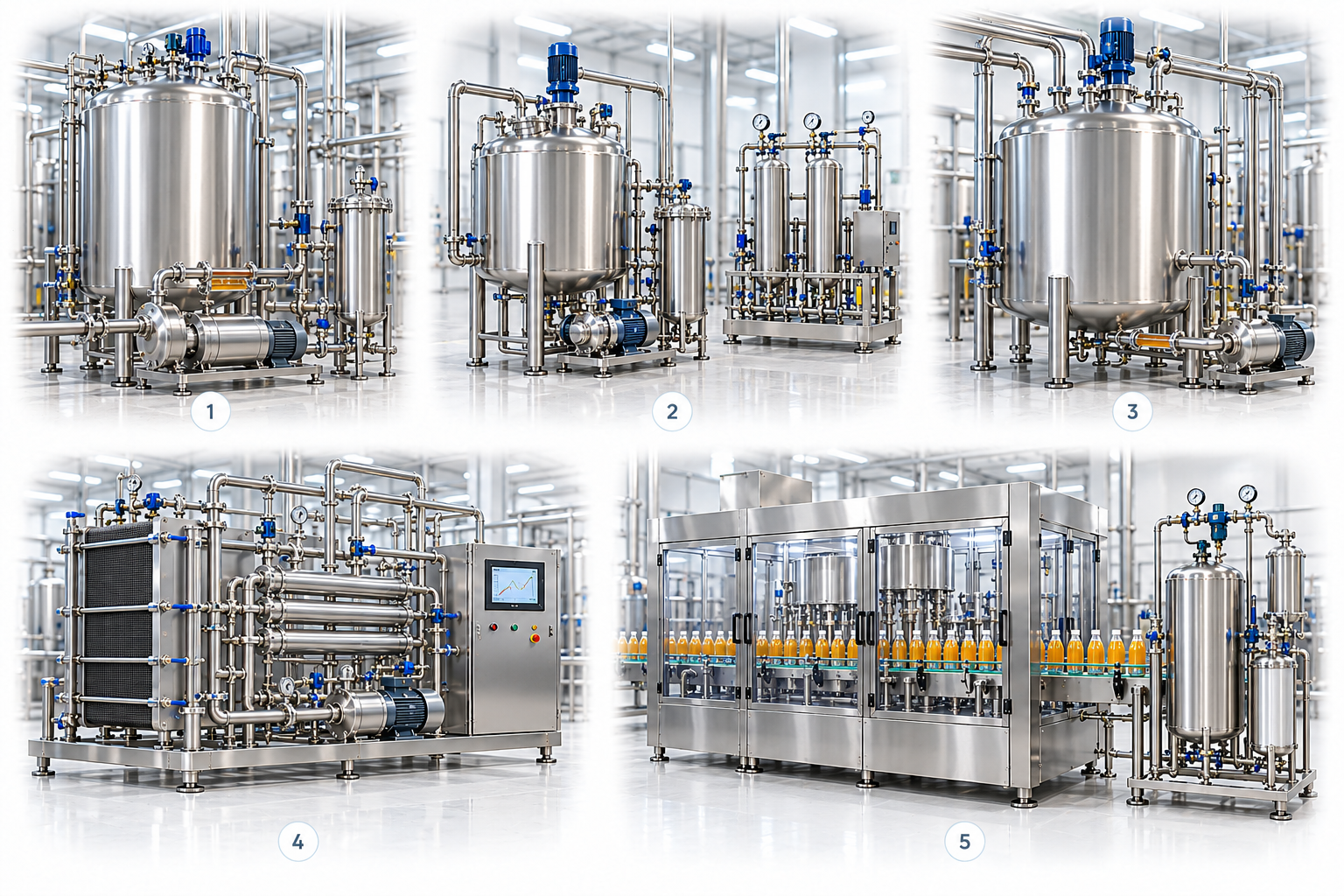
Clarification/pretreatment equipment in scene 1 and manufacturer product images below are role references. Filters are selected for the beverage; pulp-preserving and clear-juice processes differ. Scene 4 is a selected preservation example, and the separate carbonation unit in scene 5 is optional. Verify hygienic design, wetted materials, piping, filter grade and validation separately. This is not an actual product/installation photograph or piping design.
A conceptual illustration created to explain equipment and application locations. It is not an actual product photograph, installation photograph or piping/wiring design.
Scroll horizontally to see the complete flow.
For products that retain pulp, distinguish contaminants to remove from particles to retain. Preservation treatment requires separate product-specific validation.
These conceptual views explain flow direction. Actual piping, wiring and physical flow rates require a separate design.
Define the intended use and conditions to identify the required role of each item.
Determine solids, sugar content, pectin, particles, and viscosity.
Check the retention stages for each ingredient and changes in filterability after mixing.
Validate the selected preservation method, such as heat treatment, together with filling hygiene.
Turbidity is not inherently a product defect. First decide whether to retain or remove pulp and pectin, then distinguish the causes of contamination and fouling in each input stream, including juice base, syrup, dilution water, and carbon dioxide.
Scroll horizontally to review all columns.
| Process objective | Step to review | Selection evidence |
|---|---|---|
| Clear juice | Clarification / fine filtration | Whether enzyme treatment is used; pectin and colloidal load |
| Products containing pulp | Filtration focused on large foreign particles | Pulp size to retain, perceived texture, and losses |
| High-sugar syrup | Pretreatment suited to viscosity | Operating temperature, differential pressure at the required flow, and media compatibility |
| Carbonation supply | Gas filtration and quality control | Particles, oil, moisture, and gas quality specifications |
These examples start the application review. Pore size or nominal rating alone does not establish suitability or retention; confirm with the actual process fluid and supplier evidence.
Test syrup, concentrate, and dilution water individually, rather than looking for problems only in the blended liquid.
Account for temperature-dependent changes in viscosity and precipitation, and compare filterability under actual filling conditions.
Risks from acid-tolerant and heat-resistant microorganisms differ by product. Do not assume that one specific pore size controls all of them.
It may remove pulp and particles that need to be retained, so vary the filtration location and method according to the intended product.
Particles, microorganisms, moisture, oil, and odor-causing components require different removal mechanisms. First check the supply gas specifications and treatment configuration.
These details help narrow the configuration and the evidence to review.
Confirm model suitability and supply scope through a technical review. Use each card to make an enquiry or review official manufacturer information.
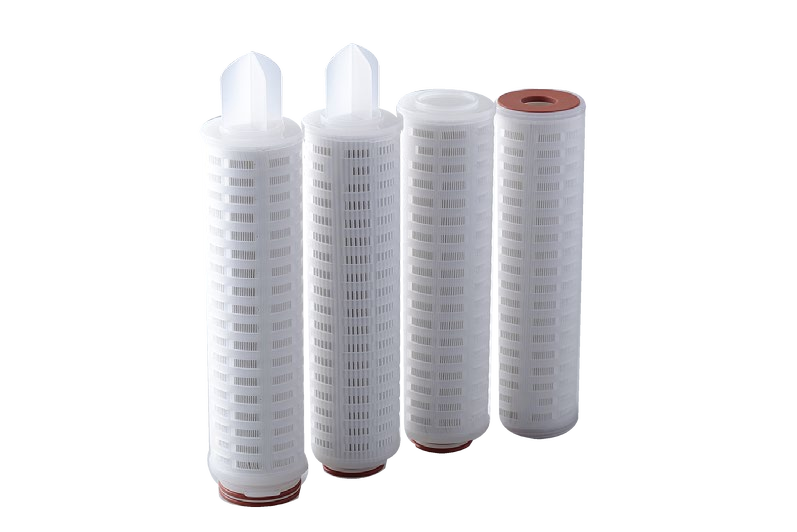
An adsorption-type cartridge filter using media containing diatomaceous earth for food and beverage clarification.
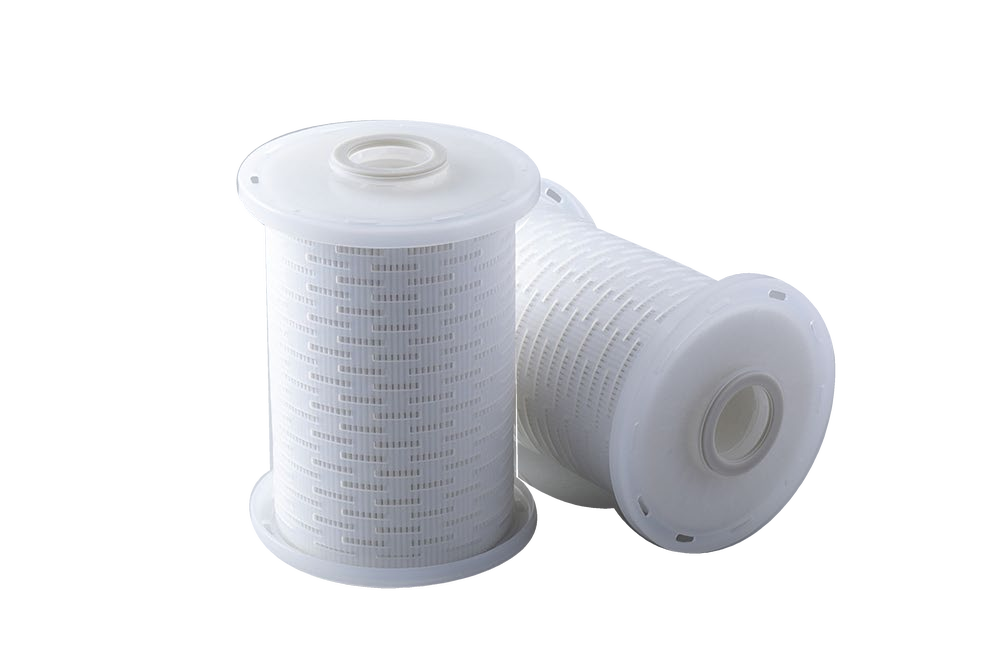
Enquire about this productManufacturer company information ↗An adsorption-type high-flow cartridge filter for food and beverage clarification.
Enquire about this productManufacturer company information ↗Product photographs and manufacturer images use permitted official materials and source links. Original explanatory schematics are identified separately from actual product photographs.
May we use Google Analytics, Google Ads and ChatGPT Ads to measure visits and completed enquiries? Learn more