
After extraction
Separate leaves, grounds, and large particles.
Find conditions that reduce sediment and haze while retaining flavor and body.
Review selection pointsDiscuss this applicationReview product locations and fluid paths.
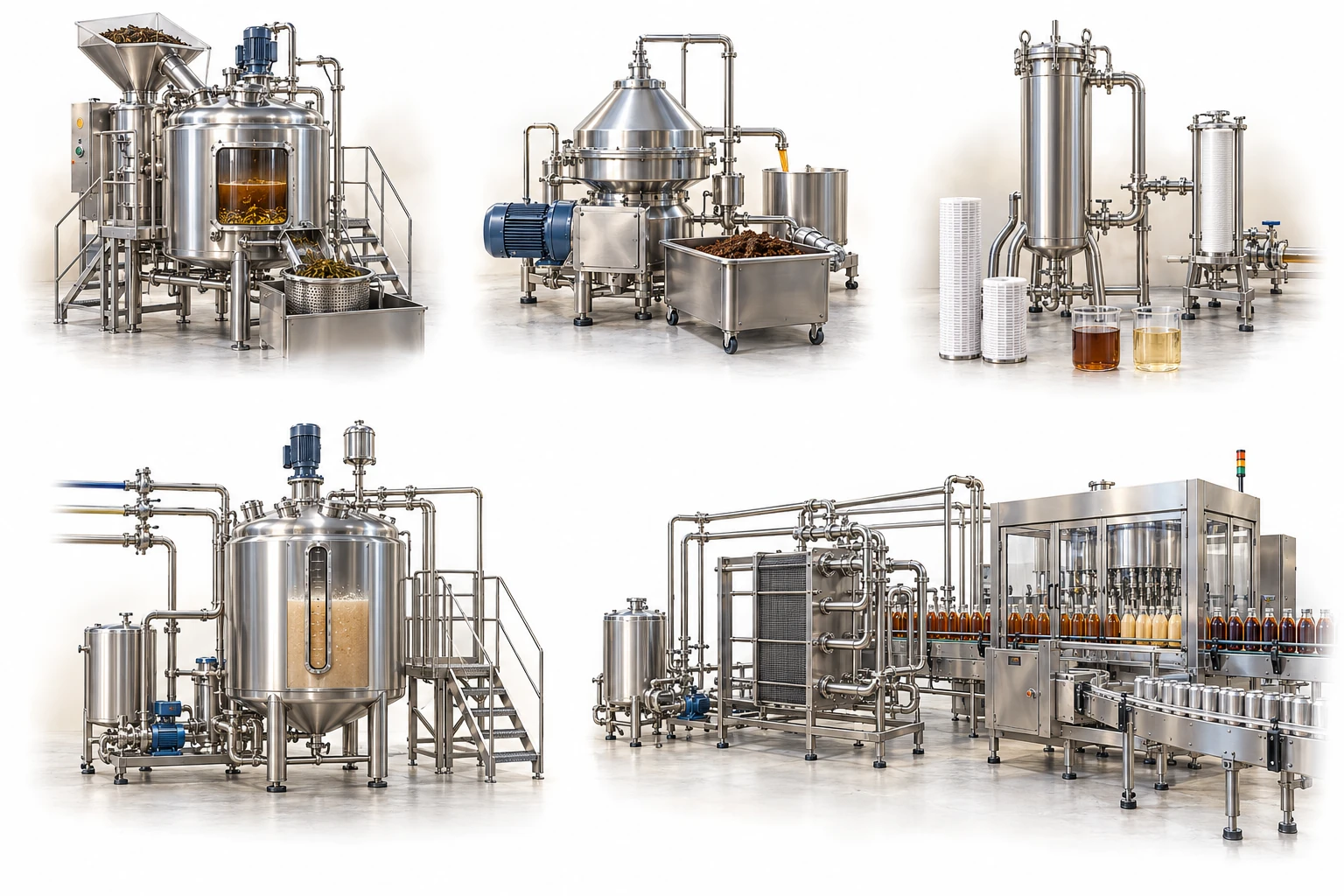
Evaluate tea haze separately from coffee oil/body. Filtration and preservation are distinct steps validated under distribution conditions.
A conceptual illustration created to explain equipment and application locations. It is not an actual product photograph, installation photograph or piping/wiring design.
Scroll horizontally to see the complete flow.
First define how much aroma, oil, and body should be retained. Polishing alone does not guarantee microbial stability during storage.
These conceptual views explain flow direction. Actual piping, wiring and physical flow rates require a separate design.
Define the intended use and conditions to identify the required role of each item.
Separate leaves, grounds, and large particles.
Evaluate the effects of fine particles and components that cause sediment formation.
Verify sediment formation, flavor, and microbial stability under actual distribution conditions.
Fine particles, oils, and colloids in extracts affect each product differently. Distinguish the intended appearance of clear tea, RTD coffee, and cold brew, and check sediment formation and taste changes during storage together.
Scroll horizontally to review all columns.
| Process objective | Step to review | Selection evidence |
|---|---|---|
| Extraction residue | Pretreatment filtration | Particle size distribution, solids, flow, and fouling |
| Tea haze and sediment | Depth filtration / polishing | Composition, including polyphenols and proteins; haze after cooling |
| Coffee oils and body | Comparative media testing | Oil adsorption; changes in aroma, color, and sensory properties; product loss |
| Storage stability | Full-process validation | Heat treatment, filling, storage conditions, and microbial control |
These examples start the application review. Pore size or nominal rating alone does not establish suitability or retention; confirm with the actual process fluid and supplier evidence.
A liquid that is clear immediately after extraction may become cloudy after cooling. Check it at both production and distribution temperatures.
Do not adopt a filter simply because it improves clarity. Compare the results alongside changes in flavor, body, and solids.
Track differential pressure rise and flow recovery after cleaning to estimate filter life in batches and process economics.
Sediment newly formed during subsequent cooling or storage may not be controlled by an upstream filter alone. Consider composition and stabilization processes together.
Do not set shelf life based on filtration alone. Validation must include microbial risks and filling and distribution conditions.
These details help narrow the configuration and the evidence to review.
May we use Google Analytics, Google Ads and ChatGPT Ads to measure visits and completed enquiries? Learn more