
Maturation and blending
Check sediment, ingredient-derived particles, and additive characteristics.
Reduce chill haze, sediment, and blending particles while preserving the product's character.
Review selection pointsDiscuss this applicationReview product locations and fluid paths.
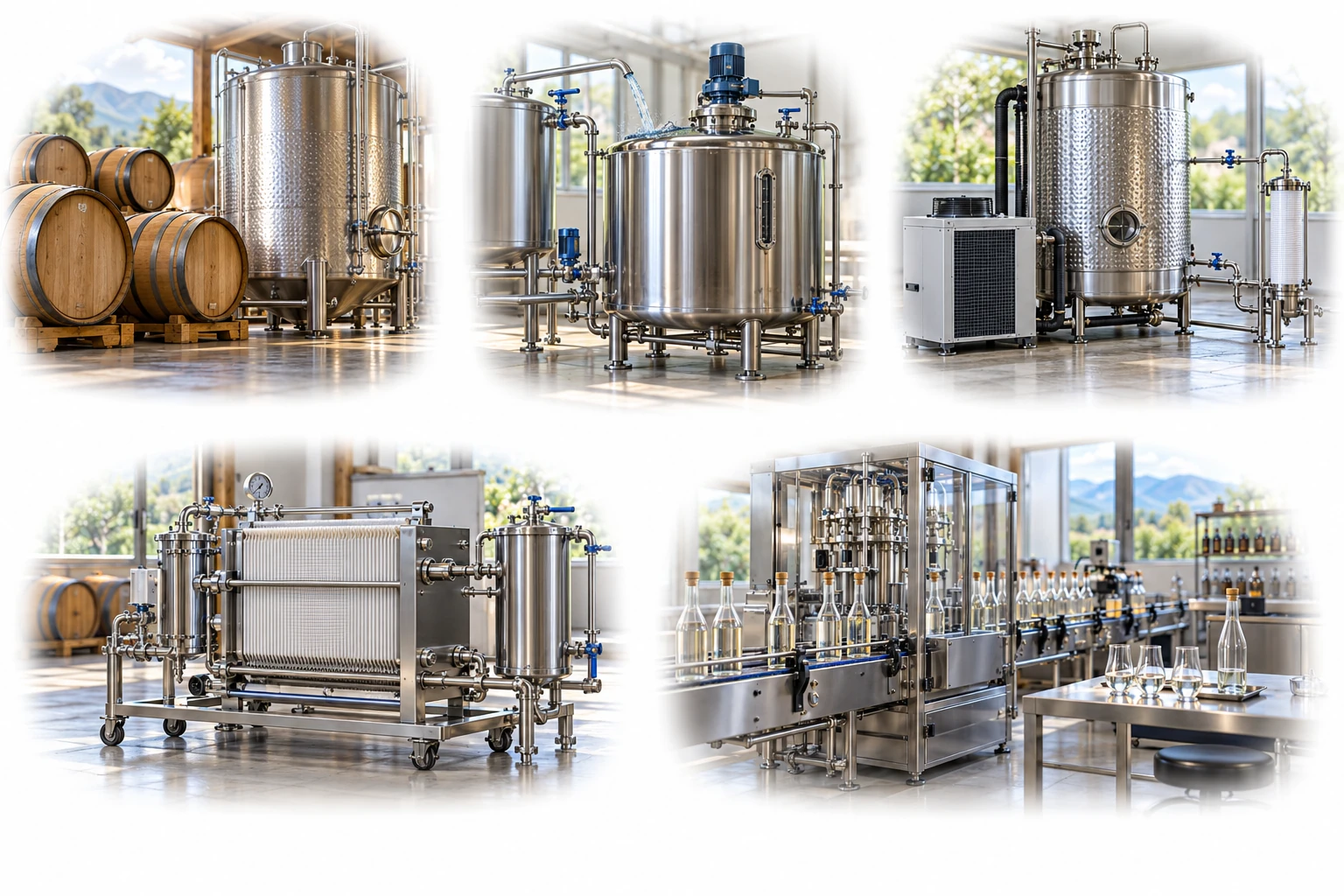
Spirits chill filtration and microbial control in sake or low-alcohol products are distinct. Select the route for beverage type and sensory target.
A conceptual illustration created to explain equipment and application locations. It is not an actual product photograph, installation photograph or piping/wiring design.
Scroll horizontally to see the complete flow.
Test under the actual chilling and dilution conditions for each product. Check aroma, color, yield, and changes during cold storage together.
These conceptual views explain flow direction. Actual piping, wiring and physical flow rates require a separate design.
Define the intended use and conditions to identify the required role of each item.
Check sediment, ingredient-derived particles, and additive characteristics.
Reproduce cooling and dilution conditions to test the required filtration method.
Check appearance before bottling and changes during long-term and low-temperature storage.
Even after distillation, dilution water, maturation, blending, and added ingredients can cause haze. Check behavior at different alcohol strengths and storage temperatures, and compare aroma, color, and texture before and after filtration.
Scroll horizontally to review all columns.
| Process objective | Step to review | Selection evidence |
|---|---|---|
| Chill haze | Filtration at a defined temperature | Lipid components, alcohol strength, and storage temperature |
| Maturation sediment and foreign matter | Depth filtration / cartridges | Particle load, color and aroma adsorption, and yield |
| Sake and low-alcohol beverages | Evaluate microbial control | Product composition, residual sugar, subsequent heat treatment, and target organisms |
| Dilution and blending | Water and ingredient pretreatment | Water quality, additive solubility, and precipitation after mixing |
These examples start the application review. Pore size or nominal rating alone does not establish suitability or retention; confirm with the actual process fluid and supplier evidence.
Flow measured with water may differ from the flow and membrane wettability of the actual alcoholic beverage.
Review membrane, housing, and seal suitability for alcohol and flavorings, as well as extractables and effects on odor.
Chill filtration and adsorptive media can affect product characteristics. Define sensory and appearance criteria for comparison before and after treatment.
Risk varies with alcohol strength, sugar, pH, and product type. Low-alcohol beverages, liqueurs, and diluted products in particular require separate assessment.
Haze can form anew downstream as ingredients mix or temperature changes. First identify when it occurs and under what conditions.
These details help narrow the configuration and the evidence to review.
May we use Google Analytics, Google Ads and ChatGPT Ads to measure visits and completed enquiries? Learn more